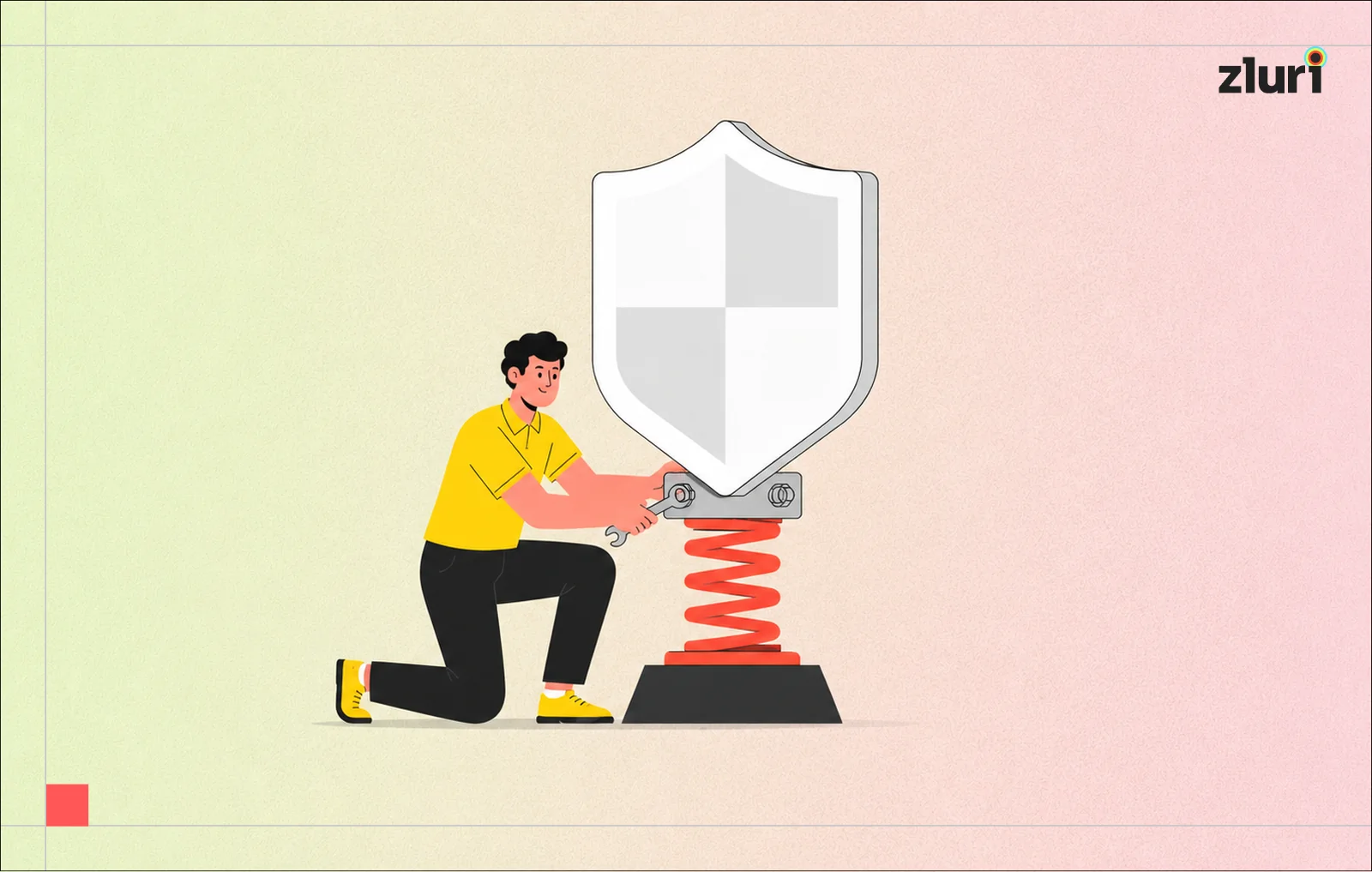

Every security leader can justify another prevention tool without much friction. Almost none of them walk into the same room and say the sentence that actually matters more: prevention is going to fail eventually, and I need a budget for what happens when it does.
Security budgets are remarkably consistent across organizations of every size and maturity level, and the pattern is worth naming plainly: they concentrate on prevention. Firewalls, endpoint detection and response, email and phishing filtering, web application firewalls, vulnerability scanning, SIEM platforms aggregating logs and alerts. All genuinely useful. All aimed at the same target: stopping the attack before it lands.
What's harder to find in that same budget is a comparable line of investment in what happens the moment prevention fails anyway. Not because security leaders don't know it matters. Because asking for it requires a conversation most of them would rather avoid.
At a glance, before the detail:

Why Prevention Is the Easy Conversation
A line item for endpoint detection and response reads, to a board or an auditor, as due diligence: evidence the organization did what a reasonable organization does. It shows up cleanly in a compliance questionnaire, a cyber insurance application, a vendor risk assessment. It's a story that's easy to tell upward, here's what we bought, here's what it blocked, here's the dashboard proving it's working, and it's a story that requires no uncomfortable admission on the security leader's part.
Prevention tooling also comes with a built-in confidence narrative. Every blocked attempt, every flagged email, every intrusion the firewall caught becomes a small, visible proof point that the investment is paying off. That's genuinely useful for morale and for justifying next year's budget. It's also, quietly, a story that lets everyone in the room, the security leader included, avoid asking what happens on the day something gets through anyway.
Why Resilience Is the Hard Conversation
A budget line for "making sure a successful attack doesn't do much damage" tells a fundamentally different story, and it's a harder one to deliver. It requires saying, explicitly, in a room with executives who'd rather hear the problem is being handled, that prevention is expected to fail eventually. Not might. Will, on a long enough timeline, for every organization regardless of how much is spent on stopping it.
That sentence carries real risk for the person saying it. It can read, if framed poorly, as an admission of doubt in the very program the security leader is supposed to be championing, or worse, as an excuse being pre-loaded for a future failure. Nobody wants to be the person who told the board a breach was coming and then watched one happen six months later, even though being right about that is precisely the point.
This is the actual reason resilience spend lags prevention spend so consistently. It isn't a knowledge gap. Most experienced security leaders understand the underlying logic perfectly well. It's that the conversation required to fund it is genuinely uncomfortable in a way funding another prevention tool never is, and organizations, left to their own incentives, will keep choosing the comfortable conversation.
The Reputational Math Most Boards Get Backward
The instinct, in the room, is to treat "we prevented it" as the story worth protecting and "we recovered well when it happened anyway" as a distant, hypothetical concern not worth spending real budget on today. In practice, the math usually runs the other way.
Organizations rarely take their worst reputational damage simply because a breach happened. Breaches happen to well-run organizations constantly, and the market has largely absorbed that reality. What actually produces the lasting damage is discovering, publicly and under pressure, that nobody could quickly say what the breach actually touched, because the underlying access data was too sprawling and stale to answer the question fast.
That failure reads as incompetence in a way the breach itself usually doesn't. A board that funds only prevention is optimizing for a story, "nothing happened on our watch," that offers no protection at all on the one day the story stops being true.
What Actually Changes the Conversation
The security leaders who do successfully get resilience funded tend to reframe the ask rather than soften it. Instead of "assume we'll get breached," the more effective version of the conversation is closer to: our prevention spend is genuinely strong, and I want to make sure that on the one day it doesn't hold, the exposure is as small as it can possibly be. That's not an admission of weakness in the existing program. It's the completion of it.
The concrete version of that ask is rarely a big, dramatic budget line. It's usually about a lower-profile, ongoing discipline: keeping access continuously scoped to what people and accounts actually need, so that whichever identity eventually gets compromised was never carrying more exposure than its role required. That's a genuinely different pitch than "buy this tool in case of emergency." It's closer to: reduce, continuously, what a bad day can actually cost us, which is a case most boards can hear without feeling like they're being asked to accept defeat before the fight starts.
Frequently Asked Questions
Why do security budgets default to prevention instead of resilience?
Largely because prevention spend is easier to defend upward. It reads clearly as due diligence to a board, an auditor, or a cyber insurance application, and it comes with a built-in confidence narrative, every blocked attempt is visible proof the investment is working. Resilience spend requires an explicit acknowledgment that prevention will eventually fail, which is a harder conversation to have even though it's the more accurate one.
Is asking for a resilience budget an admission that prevention isn't working?
No, and framing it that way is usually what causes the ask to fail. The more effective framing treats resilience spend as the completion of a strong prevention program, not a hedge against a weak one: prevention reduces how often something gets through, resilience determines how much it costs when it eventually does.
Why does discovering a slow answer during a breach damage reputation more than the breach itself?
Because breaches happening to otherwise well-run organizations is a reality the market has largely absorbed. What reads as genuine incompetence is a slower, more public failure: not being able to quickly and accurately say what a breach actually touched, which signals that the organization's access data was too sprawling and stale to answer a basic question under pressure.
What does a resilience budget actually fund, in practice?
Most often, ongoing access governance discipline rather than a single large purchase: continuous discovery of every identity and application, access reviews that catch accumulated permissions nobody's revisited, and mover-stage workflows that remove old access as reliably as new access gets granted. The goal is keeping every identity's exposure as small as its current role genuinely requires, on an ongoing basis, not a one-time project.

.svg)