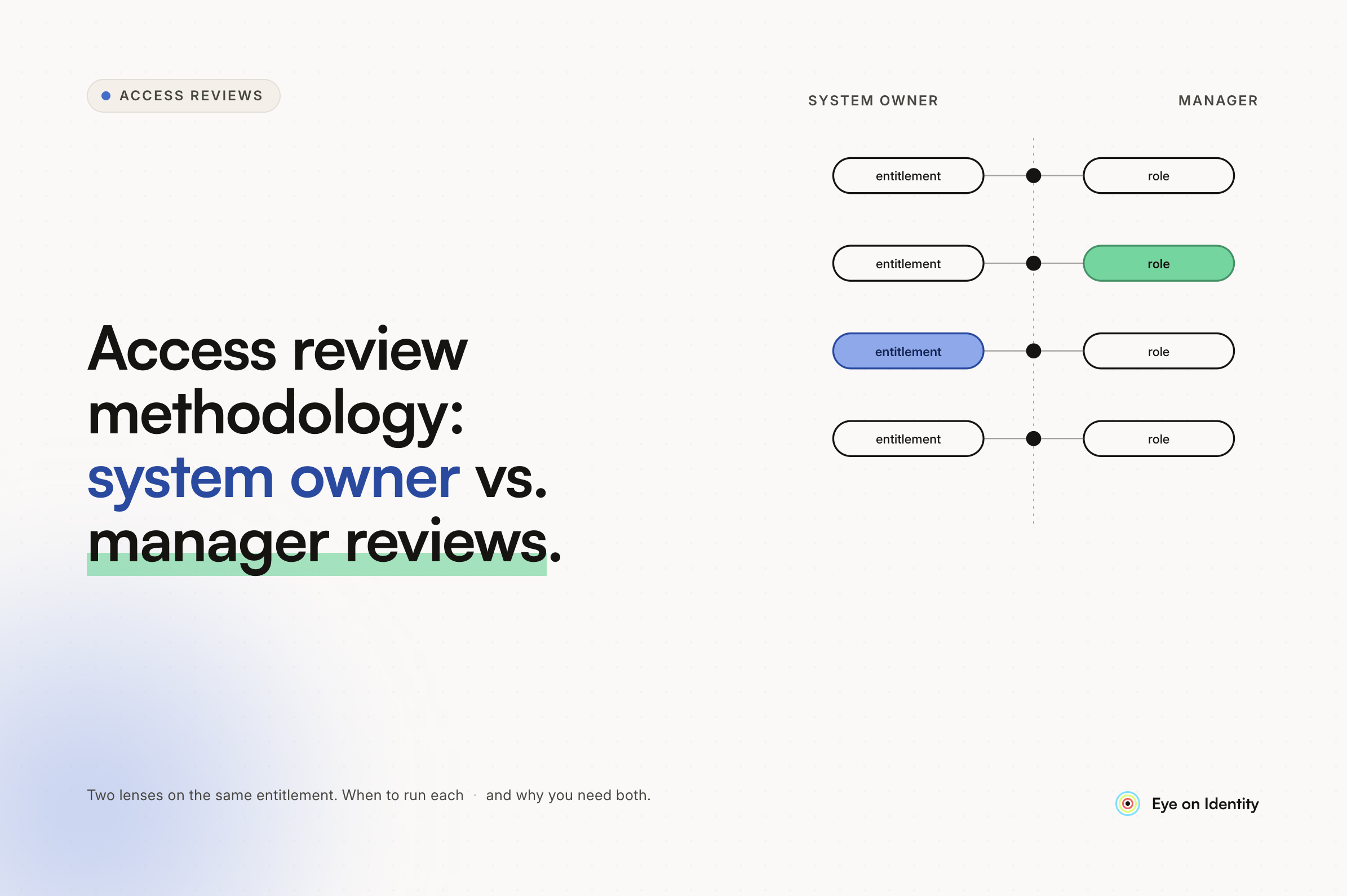


Your instinct that system owner reviews are more efficient than relying on dozens of managers is partially right — and partially wrong in the ways that matter most for security. The efficiency advantage of system owner reviews is real. The security gap it creates is also real. Understanding what each approach misses tells you why the organizations that take access reviews seriously use both.
What System Owner Reviews Get Right (and What They Miss)
Application and data owners have something managers typically don't: technical context. They know what "Salesforce system administrator" actually means in terms of data access, what a database superuser can do, and whether a specific AWS IAM role carries permissions that would be dangerous in the wrong hands. When a manager reviews their team's Salesforce access and sees "Admin," they often don't know whether to be concerned. The system owner does.
This technical context is what makes system owner reviews valuable for the entitlement validation question — not just whether someone has access, but whether the level and type of access is appropriate.
The gap: system owners have no visibility into whether the access is still relevant to the employee's current job. They don't know that someone moved from Sales to Engineering three months ago and no longer works with the customer accounts that justified their Salesforce admin role. They don't know that a contractor's engagement ended and their manager never submitted an offboarding request. The system owner approving that access sees a valid, active account with appropriate technical permissions. From their vantage point, everything looks fine.
System owner reviews are also prone to the compliance friction problem practitioners know well: application owners treat access reviews as low-priority interruptions, reviews get delayed or rubber-stamped, and the evidence IT needs for auditors is perpetually hard to collect.
What Manager Reviews Get Right (and What They Miss)
Managers have the business context that system owners lack. They're the first to know when someone changes projects, transfers departments, takes on a new role, or leaves the team. They're positioned to answer the fundamental question: does this person still need this access to do their current job?
Manager-centric access reviews are the mechanism for catching privilege creep — the accumulation of access across role changes that no one explicitly removed. Without manager reviews, an employee who's worked at a company for five years may hold access to applications from three previous roles that never got cleaned up. The system owner of each application sees an active user with appropriate permissions. The manager is the only person positioned to recognize that those applications are no longer relevant.
The gap: managers frequently lack the technical knowledge to evaluate what a specific permission level means. A manager reviewing their team's access to a data warehouse system and seeing "write access" may not understand whether that level is appropriate, excessive, or dangerous for that employee's role. They approve it because the person is on their team and seems to need some level of access. The principle of least privilege is not being enforced.
Operationally, relying on dozens of managers to review access across dozens of applications creates a significant coordination burden. Response rates are inconsistent, reviews get deprioritized, and the quarterly campaign that was supposed to take two weeks stretches to two months.
The Multi-Level Access Review Approach
The architecture that eliminates the blind spots of both approaches uses them sequentially rather than choosing one:
Level 1 — Manager review (business validation). The reporting manager answers the business question: does this person still need access to this system to perform their current job function? This is a yes-or-no decision that doesn't require technical knowledge. It catches the privilege creep and role change scenarios that system owners miss. When the manager approves, they're attesting to the business need.
Level 2 — System owner review (entitlement validation). Once the manager has confirmed the business need, the application or data owner reviews the specific permissions assigned to that user. They're answering a different question: is this the right level of access given the confirmed business need? An employee who legitimately needs Salesforce access may not legitimately need admin-level access. The system owner is positioned to catch this; the manager isn't.
The two levels answer complementary questions: "should this person have access" (manager) and "is this the right level of access" (system owner). Running them sequentially means that entitlement review only happens for access that has already been confirmed as business-necessary, which reduces the volume of work for system owners and focuses their attention on the cases that matter.
For SOC 2 and ISO 27001, this structure produces stronger audit evidence than either approach alone. The reviewer record shows both business validation and technical entitlement validation, with separate attestations from two different reviewers who bring different contextual knowledge.
Time-Based Access as a Structural Complement
The commenter in this thread who described time-based access policies made an important observation: if access automatically expires and requires re-request and re-approval to persist, periodic access reviews become a backstop rather than the primary control.
This is architecturally sound. Just-in-Time access models — where access to sensitive resources expires after a defined period and must be actively renewed — shift the burden from periodic reviews to continuous access management. The review cycle still has value for catching accumulated access that predates the JIT policy and for verifying that the access that's being routinely renewed is still appropriately scoped.
IGA platforms that implement both — time-based access for sensitive resources combined with periodic certification campaigns — give you layered controls: automatic expiration reduces the standing access footprint, and access reviews catch what slips through.
Group-Based Reviews as an Efficiency Mechanism
For organizations concerned about the operational burden of reviewing access app-by-app across dozens of managers, group-based access reviews address the efficiency problem directly.
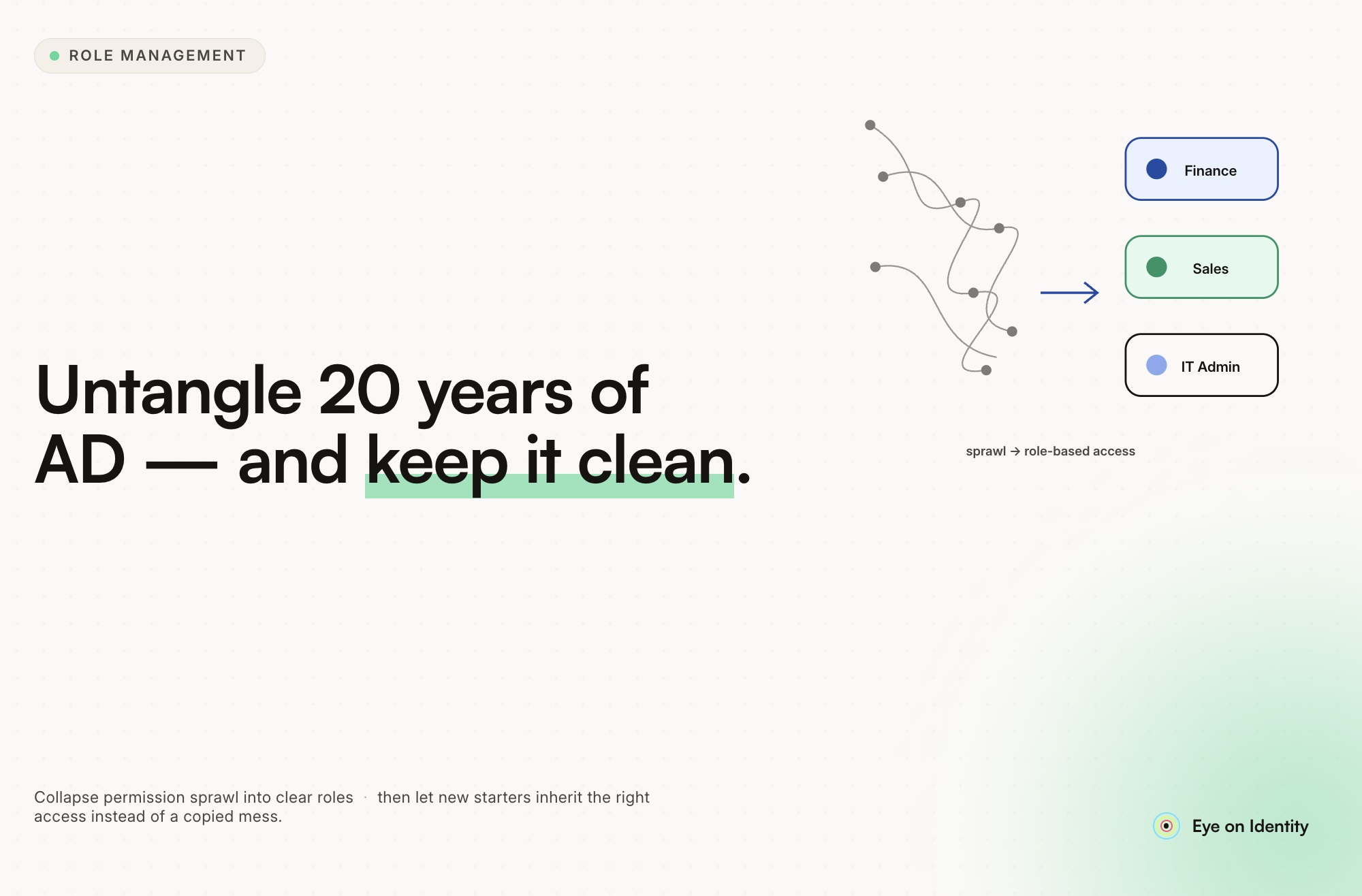
Rather than reviewing individual application assignments, reviewers certify membership in directory groups (Azure AD groups, Okta groups) that control access to multiple downstream applications. Because a single group membership often controls access to several related systems, reviewing the group membership effectively covers multiple application access decisions at once.
This approach reduces the review burden for managers (fewer items to review), concentrates the technical entitlement review on the group structure rather than per-application permissions, and aligns the review process with how access is actually managed in most environments — through group memberships rather than direct application assignments.
The limitation to account for: group-based reviews work well when group membership accurately reflects application access. For applications whose access can be modified at the application level independently of directory group membership — users added directly to applications outside the normal provisioning process — group reviews won't surface that access. Discovery tools that map actual application access rather than just directory state fill this gap.
Frequently Asked Questions
What is the difference between a system owner access review and a manager identity review?
A system owner access review focuses on technical entitlement appropriateness — whether the permissions assigned to a user are appropriate given the capabilities of those permissions. A manager identity review focuses on business relevance — whether the user still needs access to the system given their current role and job function. System owners have technical context that managers lack; managers have organizational context that system owners lack. Effective access review programs use both.
How do multi-level access reviews work for SOC 2 compliance?
Multi-level access reviews stage the certification process: a manager reviews whether the business need for access still exists, and an application owner reviews whether the specific permission level is appropriate given that confirmed need. Both reviews are captured with timestamps and reviewer identity. The resulting evidence shows that access was validated from both a business and a technical perspective, which satisfies the layered access review requirements of SOC 2 Type II and ISO 27001.
What is privilege creep and how do access reviews prevent it?
Privilege creep is the accumulation of access entitlements over time as users change roles, join projects, and receive access that's never revoked. An employee who has been at a company for several years may hold access to systems from previous roles that remain active because no offboarding process for the specific role change was completed. Manager-level identity reviews are the primary mechanism for catching privilege creep — the manager is positioned to recognize that specific access is no longer relevant to the employee's current job.
What are group-based access reviews and when are they appropriate?
Group-based access reviews certify membership in directory groups (such as Azure AD or Okta groups) rather than reviewing individual application access assignments. Because directory groups often control access to multiple downstream applications, reviewing group membership audits multiple application access decisions simultaneously. This approach reduces review volume and focuses attention on the organizational unit of access management. It works best when application access is tightly controlled through directory group membership, and requires additional discovery coverage for applications where access can be modified independently of directory state.


.svg)