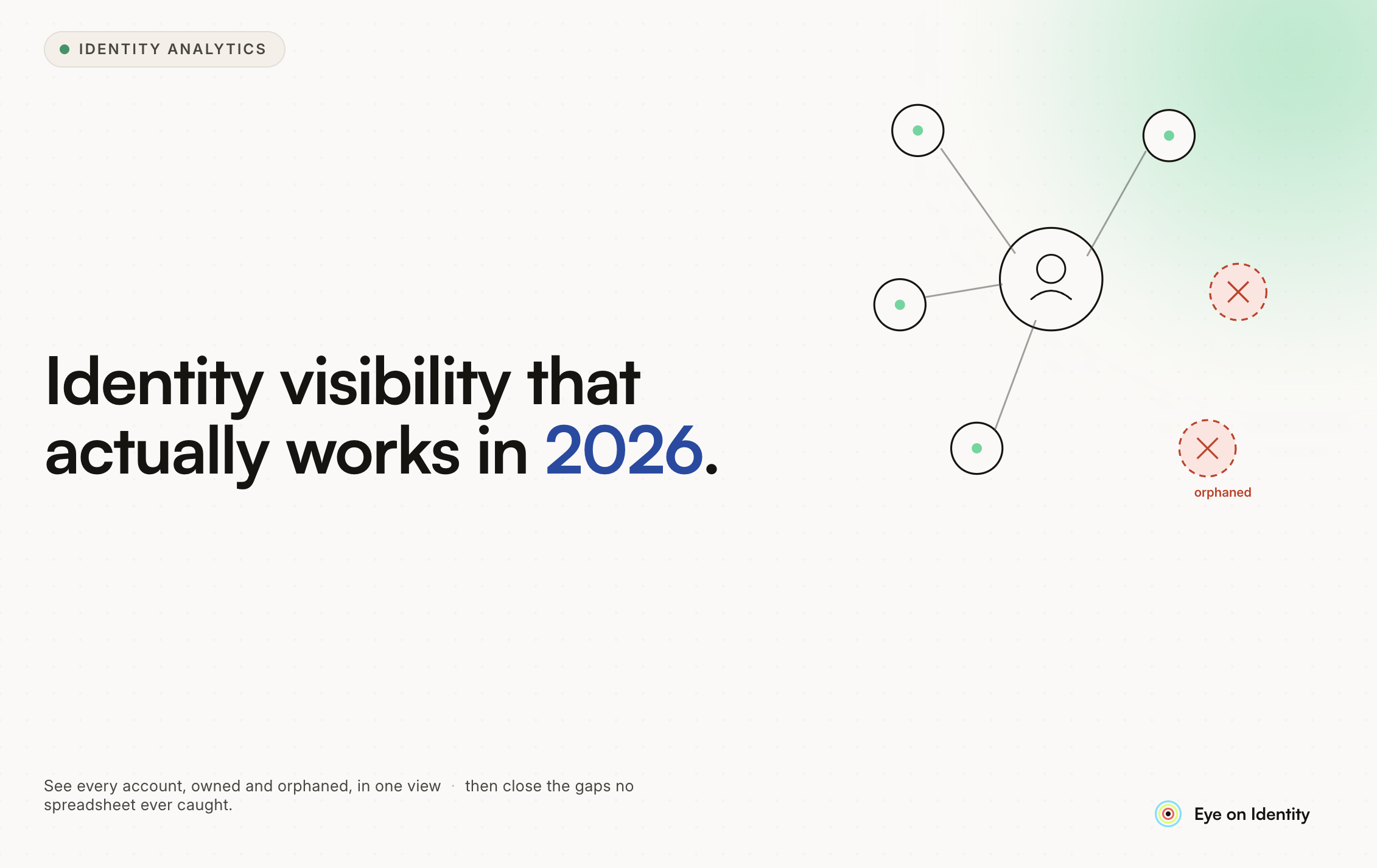


Finding 20 orphaned accounts is not a monitoring failure. It is a process failure that monitoring would have exposed sooner.
The accounts exist because offboarding did not systematically revoke access across all applications when those employees left. Manual tracking, whether in spreadsheets, checklists, or IT tickets, does not scale with the SaaS stack most organizations are running today. When you have 30 or 50 or 100 applications and people leaving every month, the gaps accumulate faster than anyone can close them manually.
The tools that actually address this problem in 2026 are identity governance platforms that connect to your application stack, surface orphaned and over-provisioned accounts automatically, and automate the provisioning and deprovisioning workflows that prevent these situations from recurring. This guide covers what to look for, how to evaluate options across the maturity spectrum, and what a working solution actually delivers.
Why Orphaned Accounts Accumulate (and Why They Are a Security Problem)
The mechanics are straightforward. Someone leaves the company. HR updates their status. IT gets notified and runs an offboarding checklist. The checklist covers the applications IT manages directly: Active Directory, email, VPN. The SaaS tools that specific teams bought and manage themselves are not on the checklist, because IT does not have a complete inventory of what is in use.
The result: the departing employee's Salesforce account, GitHub access, Notion workspace, Slack account, and a half-dozen other tools remain active. They are not necessarily being used, but they represent open attack surfaces, and in a compliance audit, each one is a finding.
The risk is not hypothetical. Orphaned accounts from former employees are a documented entry point in identity-based attacks. An attacker with the former employee's credentials has a legitimate-looking account with no active owner monitoring it.
What Identity Visibility Actually Requires
The tools that make a real difference address three connected problems:
Discovery beyond SSO. Most identity tools only see what is connected to them through SSO or SCIM. Applications that employees access directly, tools that teams bought on credit cards, browser-based SaaS accessed without SSO federation: these are invisible to directory-based monitoring. Effective identity visibility requires multi-source discovery: SSO logs, HR systems, financial and expense data, browser agents, and direct API integrations with applications.
Active user vs. licensed user distinction. Knowing that someone has an account is not the same as knowing whether they are using it. Effective tools distinguish between active users (who have logged in or used the application recently) and licensed users (who have an account that may or may not be active). Orphaned accounts are the subset of licensed accounts that belong to users who are no longer employees. Unused accounts are the subset that belong to current employees who have stopped using the tool.
Automated lifecycle workflows. Discovery tells you what exists. Automation prevents the problem from recurring. The underlying cause of orphaned accounts is that offboarding did not trigger systematic access revocation across all applications. That requires an integration between your HR system (which knows when someone left) and your application stack (which needs to be updated), with automation handling the connection so the process runs consistently regardless of who is working the offboarding queue.
The Tool Landscape in 2026
The market for identity governance and access management tools ranges from open-source platforms requiring significant technical investment to commercial IGA platforms that handle the full lifecycle out of the box.
Open-source IGA platforms like MidPoint and OpenIAM provide the governance capabilities needed for orphaned account remediation and lifecycle automation. They have connectors for common applications and can handle JML workflows. The trade-off is implementation complexity: they require upskilling, configuration investment, and ongoing maintenance. For organizations with limited budget and technical capacity, they are viable but not low-effort.
Purpose-built identity visibility tools like Veza and Oleria approach the problem from an access intelligence angle, focusing on mapping identities to specific permissions and data objects. Veza is particularly strong at the permission graph layer, showing not just who has access to an application but what specific capabilities they have within it. These tools are valuable for organizations where fine-grained permission visibility is a priority alongside basic orphaned account remediation.
Enterprise IGA platforms like SailPoint take a comprehensive approach that starts with an account correlation phase to clean up data before moving into provisioning and lifecycle management. They are the most complete solutions and the most expensive. For organizations with complex requirements and the budget to match, SailPoint's depth is warranted. For organizations discovering their first batch of orphaned accounts and trying to build a basic governance program, it is likely more than needed in the near term.
Modern SaaS IGA platforms like Zluri sit between the enterprise heavyweight and the open-source build-it-yourself approaches. They provide out-of-the-box discovery, lifecycle automation, and access review capabilities without requiring the implementation investment of an on-premise enterprise platform.
How Zluri Addresses the Orphaned Account Problem
Zluri's approach to identity visibility starts with the discovery problem rather than assuming your existing SSO covers everything.
Patented multi-source Discovery Engine. Zluri ingests signals from SSO logs, HR systems, corporate financial and expense data, browser agents (Chrome and Edge extensions), desktop agents, and direct API integrations with SaaS applications. This multi-source approach surfaces applications that are not in your SSO inventory, AI tools that employees have adopted informally, and SaaS tools that specific teams are paying for outside of IT's visibility.
Continuous orphaned account detection. Zluri's license optimization module runs automated rules to identify users who are marked inactive in your HR system or directory but still hold active licenses or accounts in downstream applications. These are flagged automatically as they occur rather than surfacing at the next manual audit cycle.
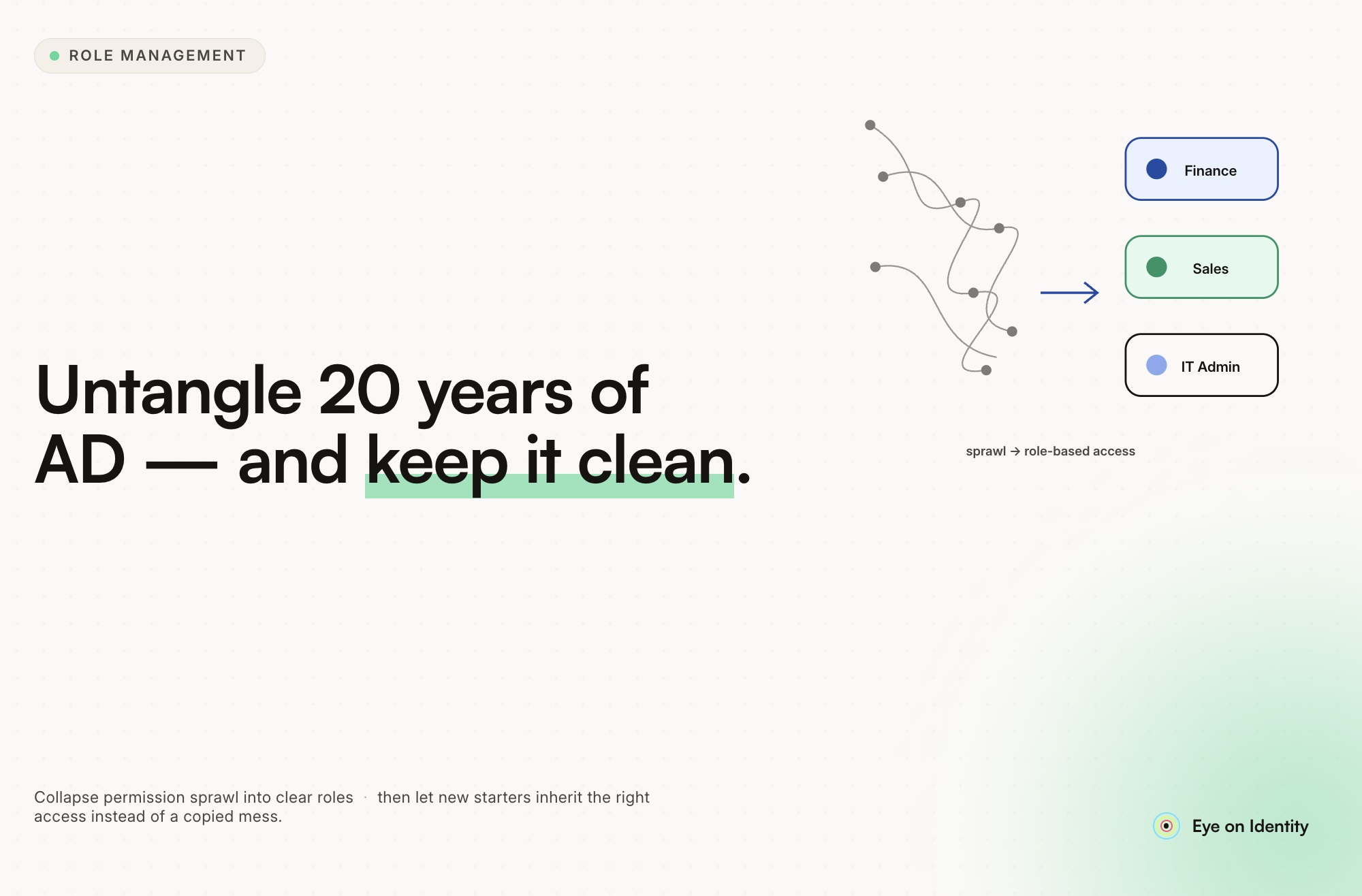
Automated JML lifecycle. Zluri integrates with HR systems (Workday, BambooHR, and others) so that lifecycle events trigger access changes automatically. When a departure date is set in the HR system, Zluri's offboarding playbook runs across all connected applications, revoking access systematically rather than depending on a checklist. The same mechanism handles onboarding (provisioning birthright access based on role) and moves (deprovisioning old access, provisioning new access simultaneously when someone changes departments).
Access reviews for audit readiness. Zluri automates certification campaigns that prompt managers to verify their team members' access on a defined cadence. The outcome is captured in a timestamped, non-editable report that can be produced for auditors. Combined with the immutable audit log of every access event, the evidence burden for SOC 2, ISO 27001, or HIPAA access control requirements shifts from manual assembly to platform export.
How to Evaluate Tools for Your Situation
The right tool depends on where you are starting from and what you need to accomplish first.
If the immediate priority is finding and closing the orphaned accounts you know exist, any IGA platform with a discovery capability and direct integrations for your specific applications can help. The question is integration depth: does the tool connect to the specific SaaS applications where your orphaned accounts live, or does it only cover SSO-connected applications?
If the priority is preventing recurrence, the evaluation should focus on the offboarding automation: how does the tool connect to the HR system, how reliably does it trigger revocation across all applications, and how does it handle applications that are not in the SSO inventory?
If audit readiness is the driver, focus on the evidence output: does the tool produce non-editable timestamped reports, does it maintain an immutable audit log of all access events, and does it integrate with compliance frameworks to map access controls to specific requirements?
For most organizations discovering orphaned accounts for the first time, the practical starting point is a SaaS IGA platform with strong discovery capabilities and HR system integration. Open-source platforms are viable but require technical investment. Enterprise platforms are the right answer when governance requirements are complex enough to justify the implementation cost.
The Three Things That Make the Difference
Practitioners who have been through identity governance implementations consistently point to three factors that determine whether a program actually works:
Integration depth. A tool that covers 80 percent of your applications leaves orphaned accounts in the other 20 percent. Evaluate coverage against your actual application inventory, not against a generic integration list.
HR system connection. Lifecycle automation only works if the tool knows when employment events happen. A direct, reliable integration with your HRMS is the prerequisite for automated offboarding. Without it, the tool requires manual triggers that replicate the manual process you are trying to replace.
Remediation workflow, not just alerts. A tool that surfaces orphaned accounts but requires IT to manually revoke them one by one is better than a spreadsheet but not by much. The value is in automated revocation playbooks that close the accounts as part of the detection workflow.


.svg)