The instinct to avoid SailPoint and Saviynt for a small healthcare organization is the right one. Both platforms were built for enterprises with tens of thousands of employees, dedicated identity engineering teams, and 12-to-18-month implementation timelines. Deploying either into a small org does not give you a scaled-down version of the enterprise tool — it gives you the full complexity without the staff to manage it.
The actual problem is finding a platform that covers the governance requirements HIPAA creates without requiring an implementation project that outlasts the consulting engagement. Here is what those requirements actually are and what to look for in a platform that fits.
Why Enterprise IGA Platforms Are the Wrong Starting Point for Small Healthcare Orgs
SailPoint and Saviynt earned their position in large enterprises for good reasons. They handle deeply complex on-prem infrastructure, mainframes, multi-forest Active Directory environments, and the kind of regulatory surface area that comes with 50,000-seat deployments. Their connector architecture, satellite components, and workflow engines are genuinely powerful for that context.
That same architecture is what makes them wrong for small organizations. The implementation cycles are long, the configuration requires specialist expertise, and the ongoing maintenance assumes a dedicated IAM team. One practitioner who went through a SailPoint implementation described the process as a project that many organizations fail to complete — not because the tool is bad, but because the resource commitment required to get it fully operational is routinely underestimated.
For a small healthcare org with a lean IT team, the failure mode is not buying the wrong governance platform. It is buying a platform that never gets fully deployed and leaves the organization more exposed than before because the budget is spent and the gaps are still open.
What Small Healthcare Organizations Actually Need From IGA
The HIPAA driver is real, but it narrows the requirements usefully. A small healthcare organization does not need a governance platform that handles mainframes, SAP, or multi-cloud entitlement sprawl. It needs a platform that covers four things reliably:
Automated user lifecycle management. When a clinician or staff member joins, moves to a different role, or leaves, access changes need to happen automatically and completely. Manual provisioning and offboarding checklists break under operational pressure — particularly in healthcare where staff turnover and role changes are frequent. The platform needs to connect to the HR system as the source of truth and trigger access changes from HR events, not from IT tickets.
Access certifications for audit readiness. HIPAA requires demonstrating that access to patient data and protected health information is reviewed, appropriate, and documented. For small IT teams, this means the certification workflow needs to be automatable — manager reviews first, application owner reviews second, with auto-remediation that executes revocations without requiring IT to log into each downstream application manually. And the output needs to be audit-ready: timestamped, non-editable reports that go directly to auditors without post-processing.
Coverage across the full app stack, including non-API apps. Healthcare organizations run a mix of modern SaaS tools and legacy clinical applications that predate modern APIs. A platform that only governs SCIM-supported applications will leave clinical systems unmanaged. The platform needs a way to reach apps without APIs — either through browser automation or agent-based connectivity — so the governance perimeter covers the full environment.
A Business Associate Agreement. This is non-negotiable for healthcare. Any platform that touches or processes protected health information as part of its identity governance function needs to sign a BAA. Evaluate this before the demo, not after.
What to Look for in a Next-Gen IGA Platform at This Scale
The category of platforms worth evaluating for small and mid-market organizations is what practitioners are calling next-gen IGA — platforms built for the commercial and mid-market segment rather than scaled-down versions of enterprise tools. The architectural difference is meaningful: these platforms start from a SaaS-native foundation rather than adapting legacy on-prem architecture for cloud environments.
A few things to specifically evaluate:
Time to value. How long does a full deployment take for an organization your size? Enterprise IGA platforms measure this in months to over a year. For a small org, a deployment that takes longer than a quarter to reach full functionality is a risk — both to the consulting engagement and to the client's compliance posture in the interim.
No-code lifecycle playbooks. Small IT teams do not have the bandwidth to maintain custom provisioning scripts or workflow code. The platform should allow lifecycle automation to be configured through a visual interface, with adjustable rules that map to HR attributes, without requiring development work for each new workflow.
Discovery beyond what IT already knows about. Shadow IT is a particular risk in healthcare — employees adopt consumer tools, personal cloud storage, and unauthorized applications that may touch patient data. A platform with a discovery engine that surfaces ungoverned applications adds security value beyond the governance of known apps.
Entitlement-level visibility, not just access confirmation. Knowing that a user has access to an application is not sufficient for HIPAA access reviews. The platform needs to show what that user can do inside the application — what roles, permissions, or data they can reach — so reviews are substantive rather than checkbox exercises.
How Zluri Addresses This for Small Healthcare Organizations
Zluri is built specifically for the mid-market and commercial segment, which is what makes it worth evaluating for small healthcare orgs where SailPoint and Saviynt are the wrong fit.
On the compliance side, Zluri offers BAAs that can be customized for HIPAA requirements — covering the contractual requirement before governance work begins. It is built to support SOC 2 and ISO 27001 alongside HIPAA, which matters if the organization has existing compliance obligations or anticipates audits across multiple frameworks.
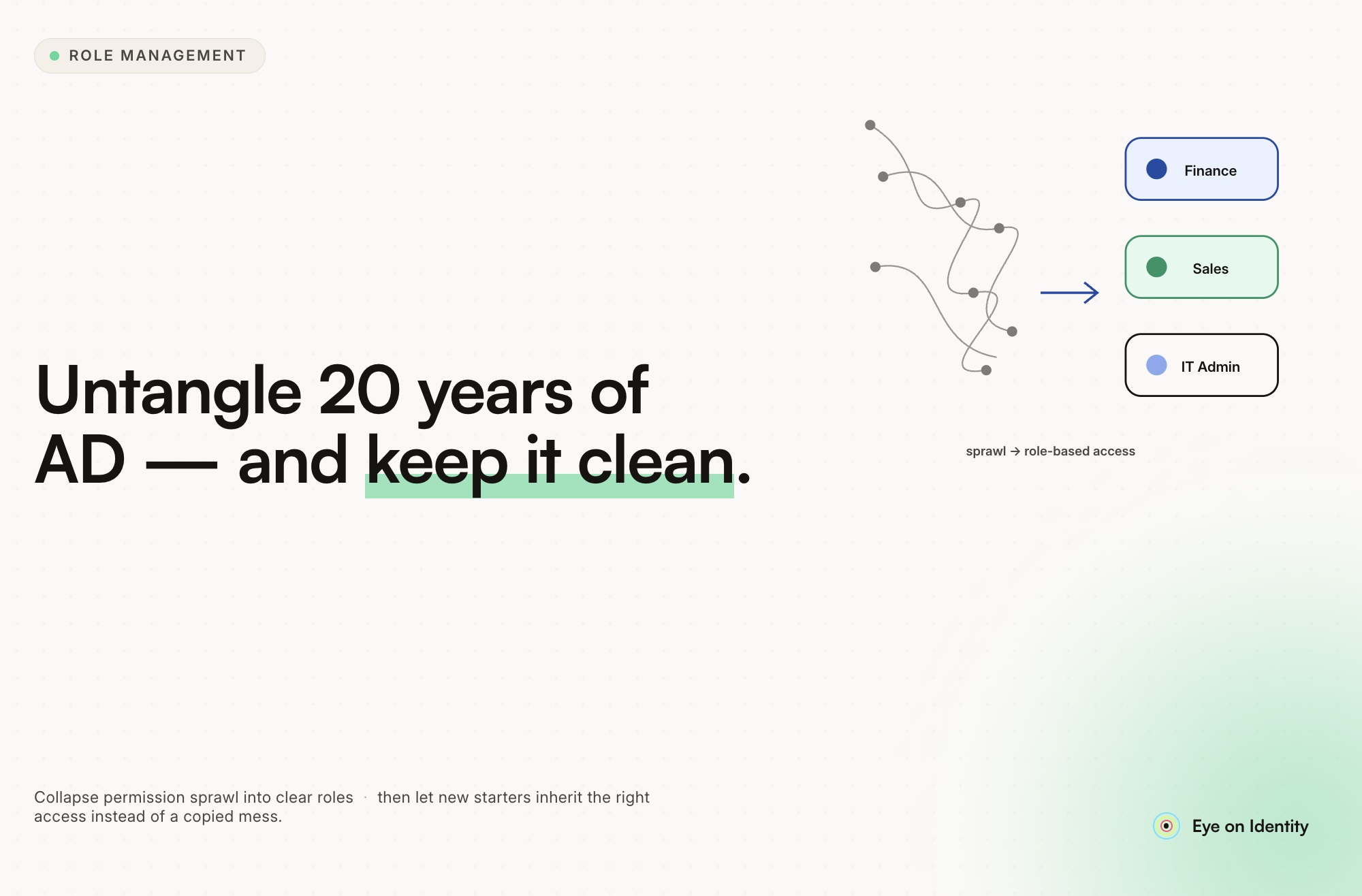
Lifecycle management runs through no-code playbooks connected to the HR system. Joiners receive birthright access automatically based on role and department. Movers get access adjusted when HR attributes change. Leavers are fully deprovisioned across all connected applications when their HR status changes to terminated, with every action logged for the audit trail.
Access certifications support multi-level review — manager first, application owner second — with auto-remediation that executes access changes in downstream applications without manual IT intervention. Completed certification campaigns generate timestamped, non-editable PDF reports ready for auditors.
For applications without APIs, Zluri uses AI-powered browser automation to execute provisioning and user discovery directly through the application interface — reaching the legacy clinical systems that SCIM-based platforms cannot govern.
One note from a practitioner who ran a demo: at the time of their evaluation, database connectors (ODBC and similar) and some entitlement management depth were still developing relative to established enterprise platforms. It is worth specifically testing these capabilities against your client's environment during a POC, particularly if they run clinical systems with database-backed access models.
FAQ
What IGA solutions are suitable for small businesses in healthcare?
Small healthcare organizations need IGA platforms built for the mid-market rather than scaled-down enterprise tools. Key requirements include HIPAA BAA availability, automated JML lifecycle management, access certification workflows, and coverage for non-API applications. Platforms like Zluri are designed for this segment and deploy significantly faster than enterprise IGA tools like SailPoint or Saviynt.
Do small healthcare organizations need IGA or is IAM sufficient?
HIPAA's access review and audit trail requirements go beyond what IAM tools handle. IAM covers authentication — who can log in. IGA covers governance — who has what access, whether it is still appropriate, and whether the organization can prove it. Access certifications, entitlement reviews, and systematic offboarding documentation are IGA functions that IAM platforms do not perform.
What is a BAA and why does it matter for IGA in healthcare?
A Business Associate Agreement is a contractual requirement under HIPAA for any vendor that handles or processes protected health information on behalf of a covered entity. Any IGA platform that connects to healthcare systems and manages user access to patient data needs to sign a BAA. This should be confirmed before procurement, not after.
How long does IGA implementation take for a small organization?
Enterprise IGA platforms like SailPoint typically require 12 to 18 months for full deployment in complex environments. Next-gen IGA platforms built for the mid-market can reach full functionality significantly faster — often within weeks to a few months — because they start from a SaaS-native architecture rather than requiring satellite components and custom connector development.


.svg)