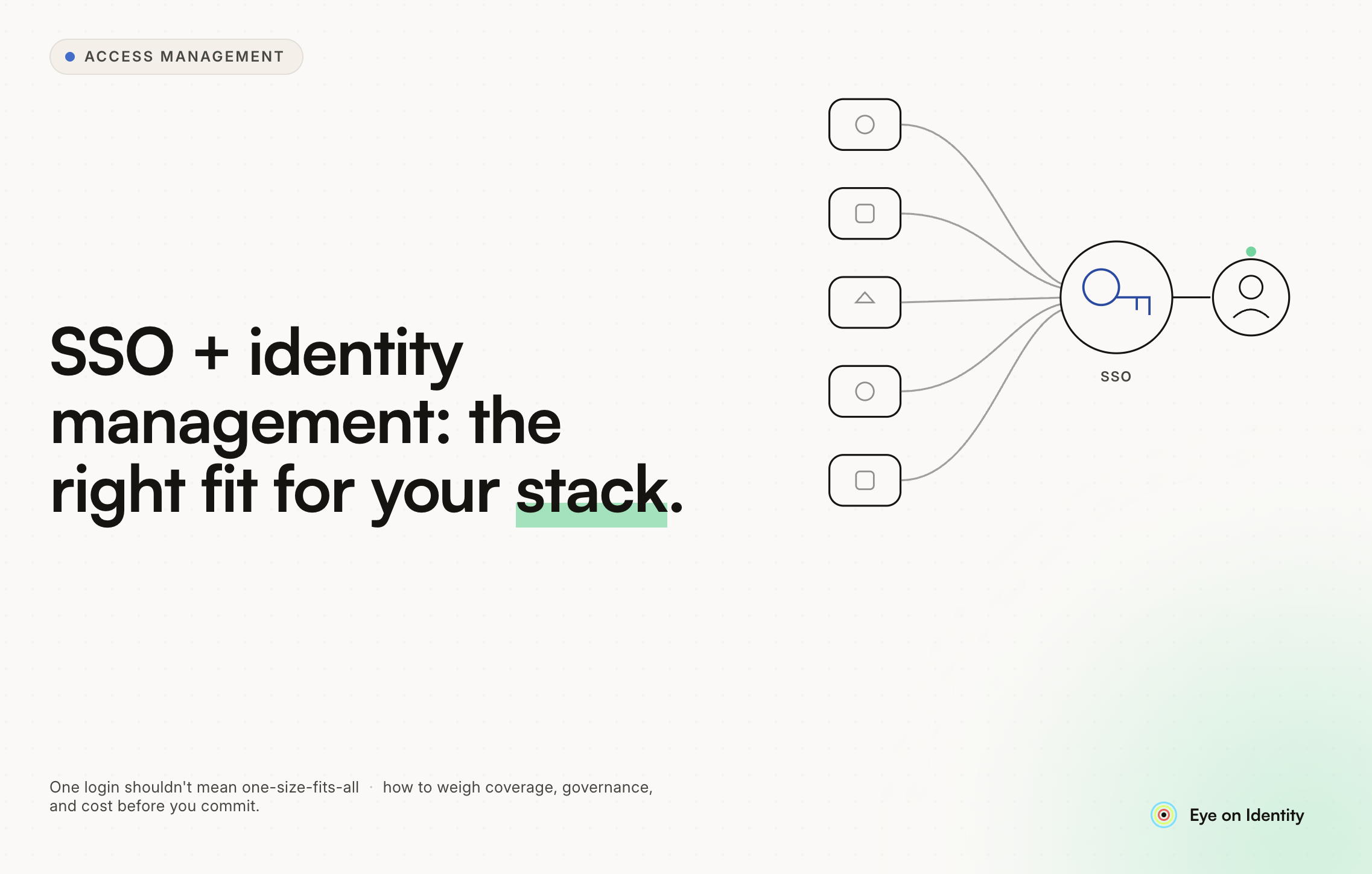


Moving from OpenLDAP to a modern SSO solution is one of those infrastructure decisions that sounds straightforward until you start researching it. The protocol landscape alone (LDAP, Kerberos, SAML, OIDC, OAuth 2.0) is enough to cause confusion, and the tool options range from lightweight reverse proxy authenticators to full enterprise identity platforms.
This guide breaks down the decision clearly: what you are actually trying to accomplish, which tools fit which use cases, and how the open-source and commercial options compare for teams with different scale and governance requirements.
What You Are Actually Trying to Build
The core requirement for most teams moving off OpenLDAP is a centralized Identity Provider that:
- Presents a single, consistent login page across all internal services
- Supports modern authentication protocols (OIDC and SAML) so that applications like GitLab, Grafana, Sentry, and Nextcloud can federate with it natively
- Handles password self-service so users can reset their own credentials without IT involvement
- Protects legacy services (like HTTP basic auth websites behind Nginx) through a forward authentication proxy
OpenLDAP provides a user directory and LDAP-based authentication. What it does not provide is SSO in the modern sense: a single login session that works across applications using OIDC or SAML, with a unified user-facing portal. That is the gap a modern IdP fills.
Open-Source Options
For teams with the technical capacity to self-host and maintain their identity infrastructure, open-source IdPs offer significant control and zero licensing cost. The three most commonly recommended options are meaningfully different in scope and complexity.
Keycloak is the enterprise-grade choice. Backed by Red Hat, it handles OIDC, SAML, and LDAP federation natively and has a fully customizable account management console that covers password self-service. It integrates out of the box with GitLab, Grafana, Nextcloud, and Sentry. The trade-off is operational complexity: Keycloak is a heavyweight system to deploy and maintain, and its configuration surface area is large. Teams that need the full feature set and have the capacity to run it well will not outgrow it. Teams that want to get something working quickly may find the initial setup frustrating.
Authentik has become a popular alternative to Keycloak precisely because it is significantly more approachable. The UI is modern and the configuration is more intuitive. Its "Forward Auth" capability makes protecting Nginx-backed services with a unified login portal particularly straightforward. For teams with mixed technical backgrounds or who want something maintainable without deep identity expertise, Authentik is often the recommended starting point.
Authelia is the lightweight option for teams whose primary requirement is protecting reverse proxy endpoints rather than building a full identity management platform. It is not a standalone directory and does not replace OpenLDAP's user management. Instead, it sits in front of Nginx, Traefik, or HAProxy and handles authentication and 2FA for services behind those proxies. If the core use case is protecting internal web services rather than building a complete IdP, Authelia delivers that with minimal overhead.
For the specific stack described (GitLab, Grafana, Sentry, Nextcloud, Nginx-protected services, mixed OSes), Keycloak or Authentik are the appropriate choices. Authelia alone will not cover application-level OIDC federation.
Commercial Options
Open-source is not the right fit for every team. Organizations that need vendor support, managed infrastructure, and integration with HR or cloud services often find that the operational cost of self-hosting an IdP exceeds the licensing cost of a commercial alternative.
JumpCloud is frequently recommended for teams migrating from OpenLDAP because it provides both the cloud directory that replaces LDAP and the SSO portal that replaces the login page. It has pre-built connectors for the common application stack and a free tier for small deployments. For teams that do not want to maintain their own identity infrastructure, JumpCloud significantly reduces the operational burden of running a directory.
Azure AD (Microsoft Entra ID) is the natural choice for organizations already running Microsoft 365, where users already have directory accounts. The free tier covers basic SSO for a limited number of applications. For organizations with Microsoft licensing, the directory is often already paid for and the integration work is straightforward.
Okta is the most feature-rich commercial option in this category and the reference implementation for enterprise SSO. It handles virtually every federation scenario, has deep integration with most SaaS applications, and provides strong MFA options. It is also the most expensive. For small teams, the cost does not make sense. For organizations at a scale where SSO is a critical compliance and security control, Okta's operational maturity is worth the investment.
Zitadel is a newer open-source and cloud-native option that is worth noting for teams that want something between the complexity of Keycloak and the cost of a commercial platform. Its API-first design makes it easier to integrate with modern infrastructure tooling.
The Architecture Decision: Authentication vs. Governance
A distinction worth understanding as you build out your identity stack is the difference between authentication and governance, because most IdP tools handle authentication but do not address governance.
Authentication is the layer you are building: verifying user identity, issuing tokens, enabling SSO, and managing the login experience. The IdP you choose handles this.
Identity governance is the layer above authentication: managing who should have access to which applications, ensuring that access was properly approved, reviewing and certifying access on a regular cadence, and revoking access promptly when someone leaves or changes roles. This layer matters more at scale, and it is typically where enterprises deploy an IGA platform.
For a small team running internal services, the IdP alone may be sufficient. The directory is the source of truth, access is managed directly in the IdP, and governance is informal. As the organization grows, the governance layer becomes important: access accumulates without cleanup, onboarding is manual and inconsistent, and offboarding leaves stale accounts behind.
Zluri operates in this governance layer. It connects to your IdP (whether Keycloak, Okta, Azure AD, or another platform), maps access across the full application stack, automates the joiner-mover-leaver lifecycle based on HR system events, and runs access reviews that produce the audit evidence compliance frameworks require. It does not replace the IdP. It sits above it and provides the governance processes that complement authentication.
For the immediate use case of replacing OpenLDAP with a modern SSO solution, you do not need an IGA platform to get started. The right sequence is: deploy the IdP, migrate your services to OIDC or SAML federation, establish password self-service for users, and protect legacy services through forward authentication. The governance layer becomes relevant as the organization scales and the need for systematic access management grows beyond what can be handled manually.
Making the Choice
The decision framework simplifies to three questions:
Can your team operate self-hosted infrastructure reliably? If yes, Keycloak or Authentik are the right starting points. If no, a managed service like JumpCloud or Okta removes that operational burden.
What is your application stack? Any modern IdP will handle GitLab, Grafana, Sentry, and Nextcloud since they all support OIDC natively. The differentiator is how well the tool handles your legacy Nginx-protected services and whether the forward authentication setup fits your team's technical comfort level.
What does the future state look like? If you expect significant headcount growth or compliance requirements, choosing an IdP that a commercial IGA platform can integrate with gives you a cleaner path to governance automation later. Most commercial IdPs (and Keycloak) have well-documented integration patterns with IGA platforms.
For most small-to-medium teams in the scenario described, Authentik is the practical starting point: lower operational complexity than Keycloak, excellent forward auth for Nginx, native OIDC and SAML support for modern applications, and a clean path to more sophisticated governance tooling if the organization grows into it.


.svg)