

Most organizations don't run a single identity platform. They run several — and figuring out which combinations are actually common in production, rather than in vendor pitch decks, is harder than it should be.
This article breaks down the IAM platforms IT and security teams are most commonly deploying today, what role each one typically plays, and why the "just use one tool" answer rarely reflects how identity stacks actually work.
Which IAM Platforms Are Most Widely Used in Production?
The platforms that appear most frequently in real production environments fall into two broad categories: authentication-layer tools (who the user is and how they log in) and governance-layer tools (what access they have and whether it's appropriate). Most mature organizations run at least one of each.
Okta
Okta is one of the most widely cited identity providers in production use today. It serves as the primary authentication layer for a large share of SaaS-heavy organizations, handling single sign-on, MFA, and application access. It's also commonly used as the authoritative source for user status — when a user is active, suspended, or deprovisioned in Okta, downstream systems are expected to follow.
Microsoft Entra ID (formerly Azure AD)
Microsoft Entra ID is equally prevalent, particularly in organizations with significant Microsoft infrastructure. It's widely used for SSO, MFA, and as a single source of truth for user identities and license assignments. Many organizations run Entra ID as their primary directory even when they're not fully Microsoft-stack shops.
Google Workspace
Google Workspace functions as an identity provider in organizations that use it as their primary productivity suite. It's also used as a discovery source — both for federated applications (those formally connected via SSO) and unmanaged applications that show up in login activity logs.
JumpCloud
JumpCloud appears regularly in mid-market environments where organizations need open directory management without committing to Microsoft or Google infrastructure. It's one of the more commonly used integrations for managing identity lifecycle across mixed environments — Windows, Mac, and Linux.
What About Enterprise Governance Platforms?
The platforms above handle authentication. Governance — who should have access, and does their access still make sense — is a separate layer that larger organizations address with dedicated IGA (Identity Governance and Administration) tools.
SailPoint
SailPoint is the most prominent enterprise IGA platform in production today, available in two forms: Identity Security Cloud (ISC), its SaaS offering, and IdentityIQ (IIQ), its on-premises platform. Large enterprises with complex access certification requirements, role management, and regulatory obligations tend to run one or both.
Saviynt
Saviynt is often found in large organizations managing hybrid governance scenarios — environments that span on-premises infrastructure and cloud platforms. It competes directly with SailPoint in the enterprise IGA space and is particularly common in industries with stringent compliance requirements.
OneLogin
OneLogin handles user identity management and access security across cloud-based and hybrid environments. It's positioned between the lightweight SSO tools and the heavier IGA suites, making it a common choice for mid-sized organizations that need more than basic SSO but don't yet require full lifecycle governance.
Ping Identity
Ping Identity is an enterprise suite capable of handling large-scale Active Directory environments. It's typically found in organizations with deeply established Microsoft infrastructure and complex federation requirements — the kind of environment where Okta's simpler model isn't flexible enough.
CyberArk
CyberArk occupies a different part of the stack. It's primarily used for privileged access management (PAM) — protecting administrator accounts, service accounts, and other high-privilege credentials that standard SSO tools don't govern effectively. Most organizations running CyberArk use it alongside, not instead of, their primary identity provider.
Legacy Platforms Still Present in Production
IBM and Oracle identity platforms appear in existing enterprise infrastructures, particularly in large organizations that have been running structured identity programs for over a decade. They're most often found during transitions — organizations that built their identity programs on these tools and are now migrating toward next-generation platforms, but haven't completed the move. Microsoft Identity Manager (MIM) falls into the same category, still present in many on-premises-heavy environments.
Other platforms that appear in production contexts include Duo (commonly used for MFA alongside a primary IdP), and One Identity (used in Active Directory-heavy environments for directory management and governance).
How Do These Platforms Combine in Practice?
The most common pattern in mature environments is a separation between the "maker" and the "checker."
The maker — typically Okta, Entra ID, or Google Workspace — handles authentication: verifying who the user is and granting access to applications. The checker — typically a governance tool like SailPoint or a platform like Zluri — handles oversight: ensuring that the access granted is appropriate, up to date, and visible in one place.
This separation matters because authentication tools are designed to be fast and permissive. They grant access based on policies set at onboarding, but they don't proactively review whether that access is still warranted six months later. Governance tools exist to close that gap.
What Is a Unified Identity Fabric — and Why Does It Matter?
Organizations running multiple identity platforms face a common problem: each system knows part of the picture, but no single system knows all of it. Okta knows who can log in. Entra ID knows which licenses are assigned. CyberArk knows which admin credentials exist. SailPoint knows which access was certified last quarter. But none of them can answer the question "what does this user actually have access to, across everything?"
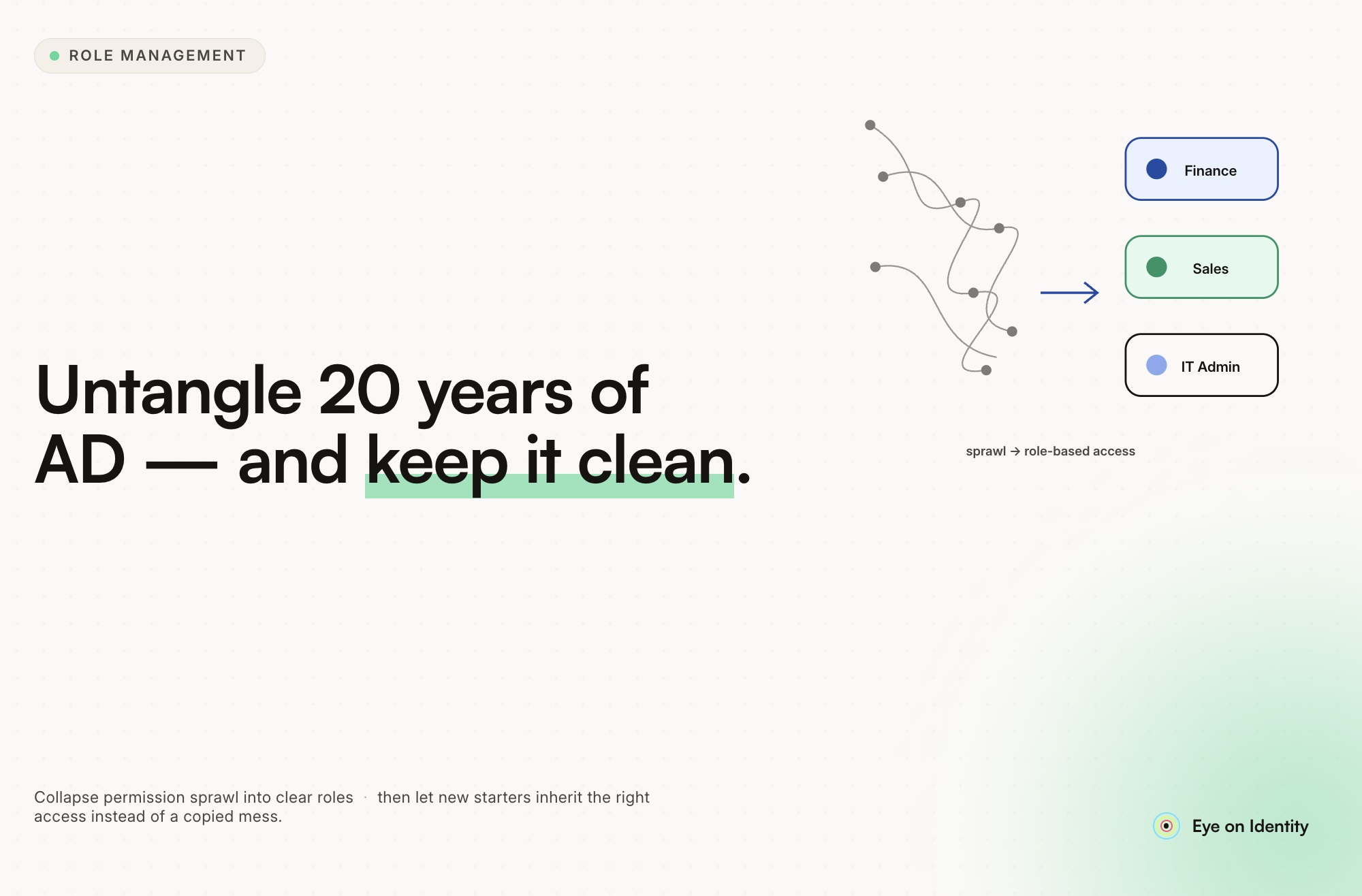
A unified identity fabric is an approach to solving that. Rather than replacing existing platforms, it provides a governance and visibility layer that connects across them — ingesting identity data from every source, normalizing it, and making it actionable in a single place.
Zluri's approach to this is to act as a next-generation identity security platform that connects to the platforms described above — Okta, Entra ID, Google Workspace, JumpCloud, SailPoint, CyberArk, and others — and provides unified governance across all of them. It covers the applications that fall outside SSO scope (the ones IT didn't provision and can't see) alongside the ones that are formally managed, giving IT and security teams a complete picture rather than a collection of partial ones.


.svg)