

Choosing SailPoint for SOX-driven access reviews is a defensible decision — it’s the most established enterprise IGA platform and has a long track record in regulated environments. But “defensible” and “straightforward” are different things, and the gap between what organizations expect when they start a SailPoint implementation and what they experience three months in is one of the most consistent themes in IGA conversations. You’ve correctly identified the two primary challenges. The specifics of each are worth understanding in detail before you scope the project, because they’ll shape your timeline, your budget, and your staffing model more than any other factor.
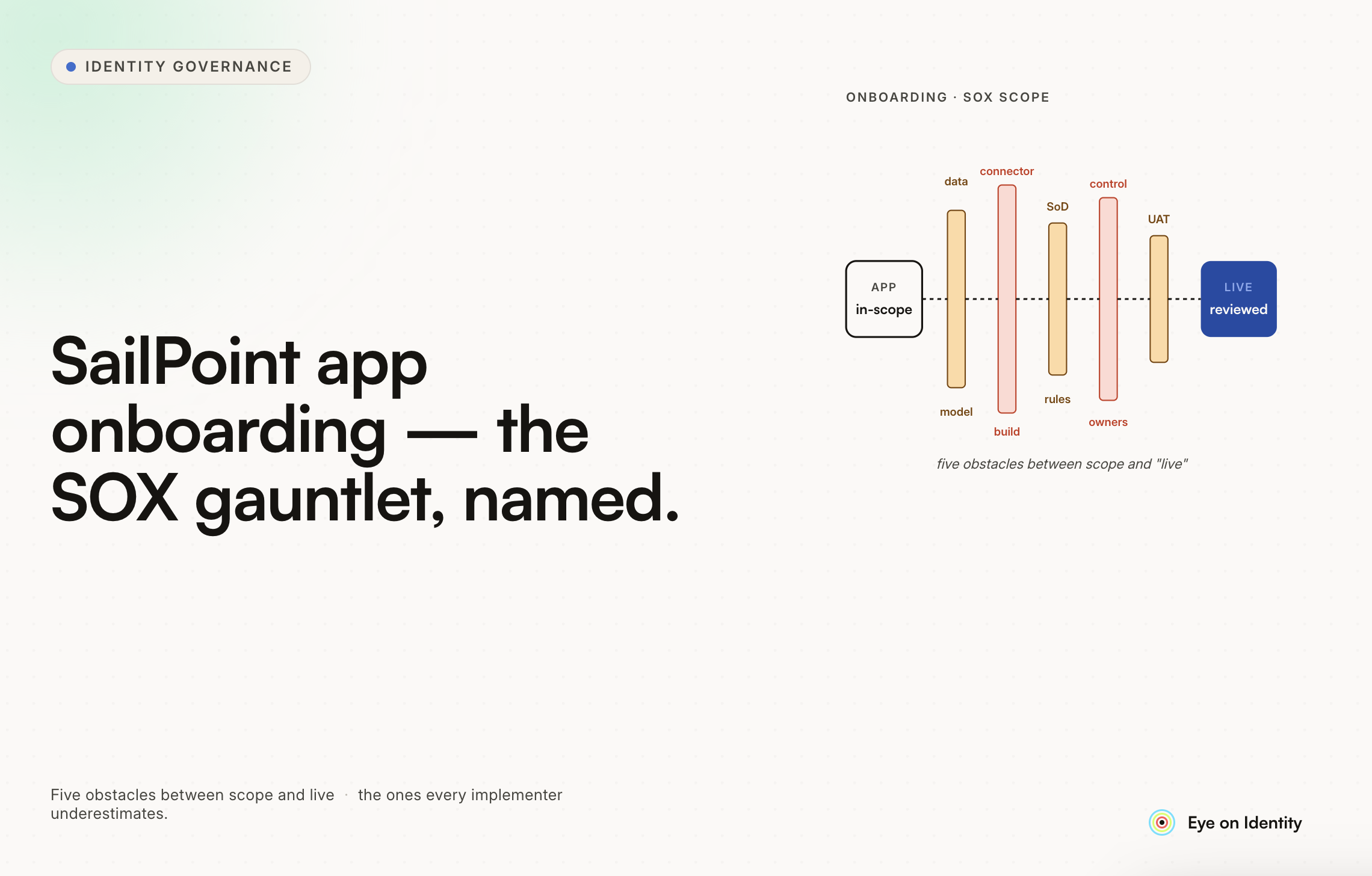
Is the Application Onboarding Challenge an API Problem? Partially, but the API layer is actually the more tractable part. The deeper challenge is what SailPoint requires before it can govern an application: a fully defined static access profile. What Static Access Profiles Actually Mean Before SailPoint can manage access to an application, you need to define — upfront, in detail — every permission, role, and entitlement that exists within that application, how those entitlements map to business roles, and what the rules are for who should have what. This is the access profile, and it’s the prerequisite for everything SailPoint does downstream: access reviews, provisioning, deprovisioning, role mining. For a mature application with well-documented permission structures, this is labor-intensive but tractable. For applications where entitlements have accumulated organically over years, where role structures aren’t documented, or where the application owner doesn’t fully understand their own permission model, defining this profile is a significant project in itself — before any SailPoint configuration begins. Multiply that across 25 applications and you have a sense of why onboarding timelines stretch. Each application requires its own discovery, mapping, and profile definition exercise. Some applications will take days. Some will take weeks. A few will take months if the underlying entitlement structure is complex or the documentation is poor. The API Layer The API integration challenge is real but secondary. SailPoint has a large library of pre-built connectors for common enterprise applications, which handles the technically simpler cases. The challenge you’ll encounter is the non-standard applications — custom-built internal systems, legacy platforms with limited or no API support, third-party tools that predate modern integration standards. For these, SailPoint typically requires custom connector development: writing code against SailPoint’s connector framework to create the integration that doesn’t exist out of the box. This is specialized work that most internal IT teams don’t have the capacity to do themselves, which is why SailPoint implementations almost always involve an external implementation partner with SailPoint-specific connector development experience. The cost of that partnership — both in professional services fees and in the time required to scope, develop, and test custom connectors — is where most organizations underestimate the total investment.
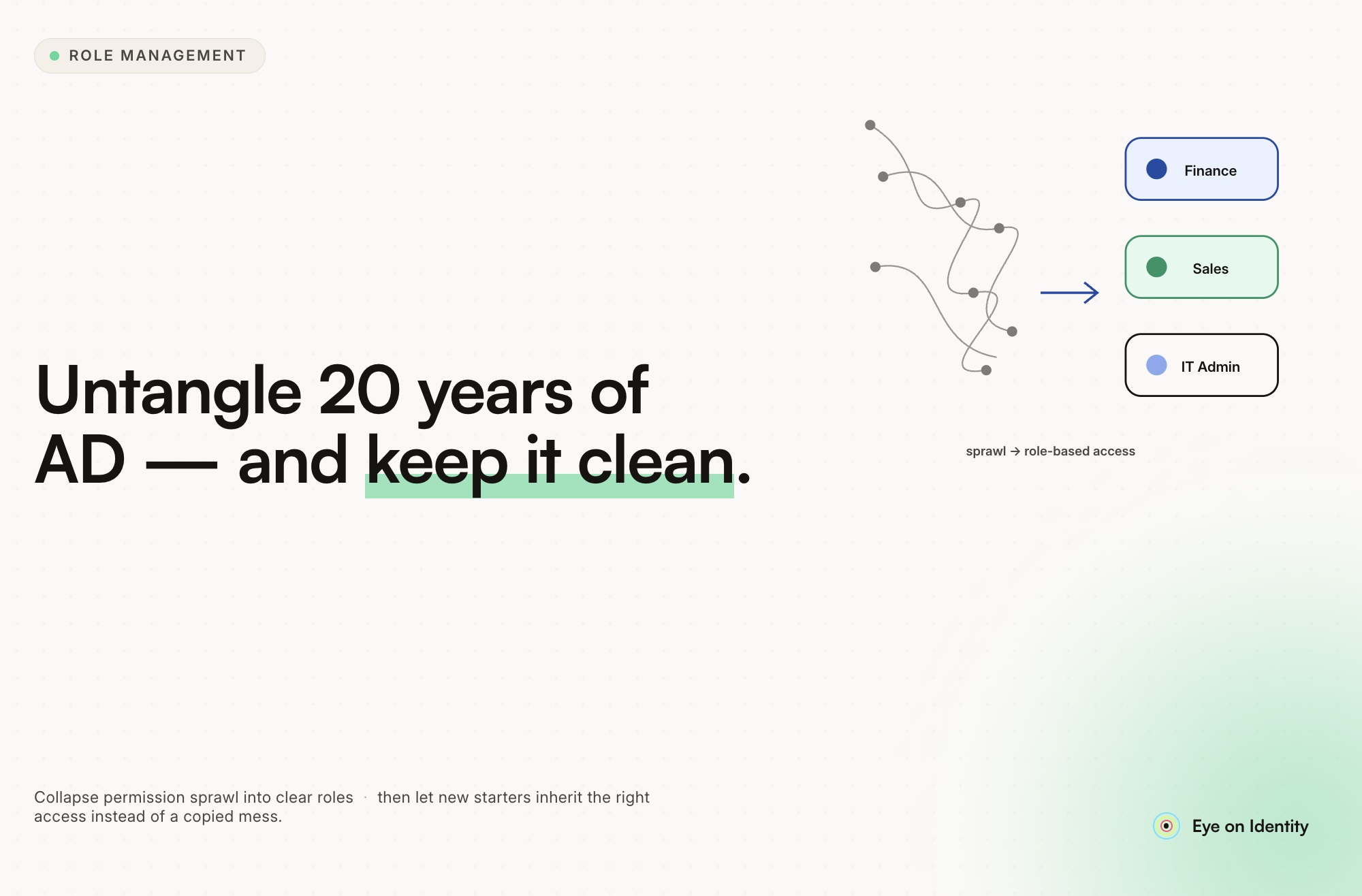
The Role Profiling Challenge Building role profiles for 25 applications is the other front-heavy investment you correctly identified. In SailPoint, roles define what access should be provisioned to users based on their attributes — department, job function, location, seniority — and the quality of your role model directly determines the quality of your governance. Why This Takes Longer Than Expected The challenge isn’t the technical work of entering role definitions into SailPoint. It’s the organizational work of agreeing on what roles should exist and what they should contain. For each application, you need answers to questions like: what are the distinct job functions that require access to this application, and what exactly does each function need to do within it? This sounds straightforward but typically requires working with multiple stakeholders — the application owner, business process owners, compliance, security — and iterating through disagreements about what least-privilege access actually looks like for each role. For applications where access has historically been granted ad-hoc (someone needed something, IT gave it to them, the role structure was never formalized), you’re often building the role model from scratch based on current access patterns — which means conducting access discovery, analyzing what people actually have, and then making normative decisions about what they should have. That’s a governance exercise, not a configuration exercise, and it requires business judgment that can’t be accelerated through technical effort. Role Mining as an Alternative Starting Point SailPoint’s role mining capabilities can help bootstrap this process by analyzing existing access patterns and suggesting role groupings based on what groups of users actually have in common. This is a more practical starting point than defining roles theoretically, but it requires clean data to produce useful suggestions — which brings you back to the access profile definition work as the prerequisite.
Realistic Timeline for 25 Applications A 25-application SailPoint implementation for SOX purposes, including custom integrations for non-standard applications and role profiling, realistically takes six to twelve months for a large organization with an experienced implementation partner. This is consistent with what practitioners report across a wide range of organizations. The timeline breaks down roughly as follows: the first two to three months are typically spent on discovery and design — understanding the application estate, defining the integration approach for each application, and beginning access profile and role definition work. The next three to six months are implementation — connector development and configuration, role profile entry, testing, and iteration. The final phase is UAT, go-live preparation, and the first actual access review cycle. SOX timing matters here. If your first SOX audit requiring evidence of access reviews has a fixed deadline, work backward from that date to determine when you need to start — and be honest with yourself about whether a six-to-twelve-month implementation timeline fits that window. If it doesn’t, you need to either accelerate the scope (fewer applications in the first phase), identify interim compensating controls to present to auditors while the implementation is in progress, or evaluate whether an alternative platform with a shorter implementation timeline is more appropriate for your situation.
What About the Applications That Don’t Support Integration? For the custom integrations on non-supporting applications, you have three realistic options: Custom connector development is the SailPoint-native approach. It’s the most technically complete solution but requires specialized development expertise and adds to both timeline and cost. For applications that are central to your SOX scope, this is usually the right investment. Governed manual task workflows address applications where automation isn’t feasible — legacy on-premises systems, highly customized platforms, or applications where custom connector development isn’t justified by the scope. The governance platform generates a structured task with an assigned owner, a deadline, and a required completion confirmation. For SOX purposes, the task completion record provides the audit evidence that access was reviewed and acted upon, even when the action itself was manual. This is less clean than automated deprovisioning but significantly better than an informal email chain with no audit trail. Accepting the gap with compensating controls is the honest option for the first phase if some applications simply can’t be integrated in time for your initial audit. Documenting which applications are in scope, which are out of scope and why, what manual controls are in place for the out-of-scope applications, and what the remediation timeline is — this is a defensible position for a first SOX audit that an auditor who understands implementation timelines will recognize as reasonable.
The Question Worth Asking Before You Commit SailPoint is the right answer for some implementations. It’s the most mature enterprise IGA platform, it has deep role mining capabilities, and it has a strong track record in SOX environments. The investment it requires is real, but for large organizations with complex entitlement structures and the budget and timeline to execute properly, that investment produces a governance capability that simpler tools don’t match. The question worth asking before you commit is whether your situation fits the profile SailPoint was built for: a large organization with dedicated IGA resources, a partner-led implementation budget, and a timeline measured in months rather than weeks. If your SOX deadline is near, your team doesn’t have SailPoint-specific expertise, and the 25 applications in your first phase include a significant number of non-standard integrations, the implementation risk is worth taking seriously. The SailPoint project that starts with a six-month timeline and delivers its first access review cycle in month ten is a real outcome, and it’s worth stress-testing your assumptions about timeline and resourcing before you’re committed.


.svg)