

SailPoint keeps coming up in enterprise IAM conversations for a reason. It's one of the most capable identity governance platforms on the market, with deep role mining, mature access certification workflows, and a track record in some of the most complex environments in the world. But "capable" and "right for your organization" are two different things — and the gap between them is where most SailPoint evaluations go wrong.
If you're actively evaluating SailPoint, or trying to understand whether it fits your situation, here's an honest breakdown of what current and recent implementation experiences look like.
Who SailPoint Is Actually Built For
SailPoint's design assumptions matter more than most vendors admit upfront. The platform — particularly IdentityIQ (IIQ), its on-premises product — was built for massive enterprises: organizations managing 10,000 or more identities, with complex on-premises or hybrid infrastructure, dedicated IGA resources, and the budget to support a multi-year program.
If that describes your organization, SailPoint's depth is a genuine advantage. Its role mining capabilities, access certification workflows, and ability to handle intricate entitlement structures across legacy systems are hard to match. The platform exists because enterprises at that scale have governance requirements that lighter tools genuinely cannot meet.
If that doesn't describe your organization, the complexity that makes SailPoint powerful for large enterprises becomes a burden rather than a benefit.
What Current Implementation Experiences Actually Look Like
The most consistent theme in recent SailPoint implementation conversations is that the process is significantly more involved than buyers expect going in.
Timeline: Plan for Six to Twelve Months
A full SailPoint IIQ deployment typically runs six to twelve months. That's not a worst-case scenario — it's the standard range for organizations that have done their homework and engaged experienced implementation partners. Organizations that underestimate the complexity or try to minimize professional services involvement often find timelines extending further.
The reason timelines run long is structural. SailPoint's governance model requires defining access profiles upfront — predefining who should have what permissions, under what conditions, for every system in scope. This is powerful in mature environments where that data exists and is accurate. In environments where access has grown organically over years, gathering and validating that data is itself a significant project before meaningful implementation work can begin.
Implementation Partners Are Almost Always Required
SailPoint implementations are rarely self-service. The technical depth required to configure access profiles, build provisioning rules, and integrate with existing systems almost always requires either a specialist implementation partner or dedicated internal IGA resources with SailPoint-specific experience.
This has two practical implications for buyers. First, the cost of the platform should be evaluated alongside the cost of implementation services — the two are effectively bundled in practice, even if they're priced separately. Second, the availability of qualified implementation partners in your region and within your budget should be part of the evaluation, not an afterthought.
Operational Burden After Go-Live
Implementation is the beginning, not the end. SailPoint environments require ongoing maintenance — managing connectors, updating access profiles as roles evolve, handling provisioning exceptions, and keeping the platform aligned with organizational changes. This work is often handled at an individual resource level, meaning organizations without dedicated IGA staff frequently find themselves in a position where the platform is technically live but not actively governed.
The flip side of this is that once SailPoint is embedded, it's not easy to replace. The depth of integration into core systems, combined with the organizational knowledge built up during implementation, creates meaningful switching costs. That's stability if the platform is working well. It's vendor lock-in if it isn't.
IIQ vs. ISC: The Strategic Question SailPoint Buyers Need to Answer
If you're evaluating SailPoint today, the choice between IdentityIQ (IIQ) and Identity Security Cloud (ISC) is the most consequential decision you'll make — and it's one that buyers don't always realize they're making.
SailPoint is actively prioritizing ISC over IIQ. Feature development, engineering investment, and the company's strategic roadmap are focused on the cloud platform. IIQ is still supported and still widely deployed, but the trajectory of the product is clearly toward ISC.
For new implementations, this has a straightforward implication: unless you have specific on-premises requirements that ISC cannot meet, ISC is the more future-proof choice. The "legacy" label increasingly attached to SailPoint in market conversations is really a label attached to IIQ specifically. ISC is a different product with a different architecture and a different trajectory.
For certifications and individual skill development, the same logic applies — ISC Engineer credentials are more forward-looking than IIQ-specific certifications given where SailPoint is investing.
Where SailPoint Falls Short of Next-Gen Expectations
For organizations that don't fit the large-enterprise profile, or that are evaluating SailPoint against newer alternatives, there are structural differences worth understanding.
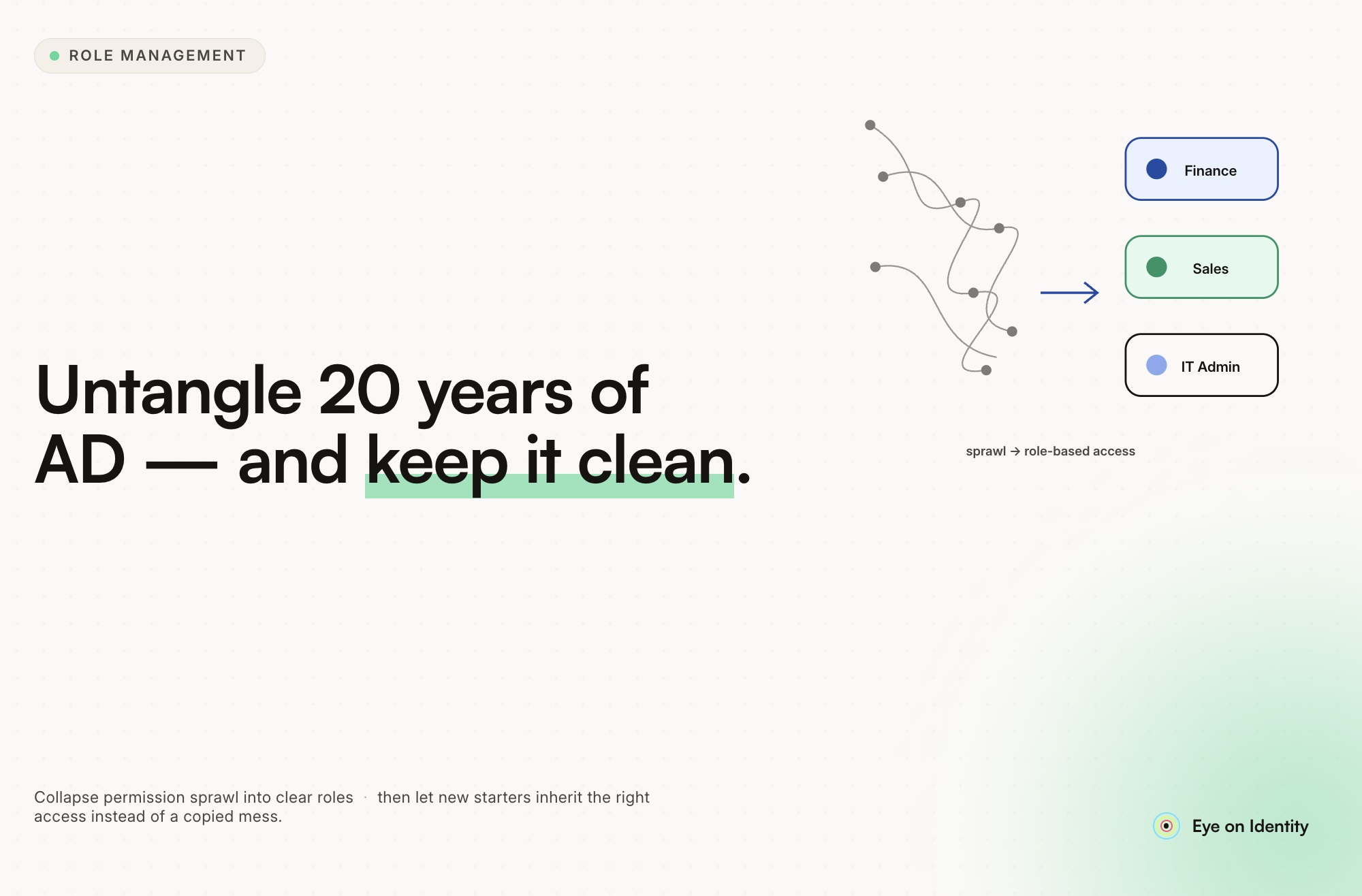
SailPoint's governance model is built around static access profiles — predefined sets of permissions that get certified periodically. This works well in environments where roles are stable and well-defined. It works less well in environments where access patterns change frequently, where a significant portion of applications sit outside formal SSO coverage, or where the organization needs to make access decisions based on whether someone actually uses their access rather than whether they were provisioned for it.
Next-generation IGA platforms like Zluri take a different approach. Rather than requiring upfront access profile definition, they use real-time activity and usage data to surface what's actually happening — who is using what, how frequently, and whether provisioned access matches actual behavior. This activity-driven model enables faster implementation (typically four to twelve weeks rather than months), reduces dependence on external consultants, and surfaces issues that static profile models miss entirely.
Shadow IT and Shadow AI discovery is one area where this difference is most visible. Modern work environments generate a long tail of applications that employees adopt independently — tools that never went through formal IT procurement, never got connected to SSO, and consequently never appear in traditional IGA tooling. Next-gen platforms are specifically designed to find and govern these applications. SailPoint's model, which works from predefined connectors and access profiles, is less equipped to surface what it hasn't been told about.
How to Decide: A Practical Framework
The decision between SailPoint and a next-generation alternative isn't primarily about features. It's about fit.
Choose SailPoint ISC if your organization manages a large identity population with complex entitlement structures across legacy and hybrid systems, has the budget for a partner-led implementation, and needs the depth of role mining and access certification that SailPoint's platform provides. The investment is real, but so is the capability.
Consider a next-generation platform if your priority is rapid deployment without external consultants, if a significant portion of your application estate sits outside formal SSO coverage, if you need real-time visibility into how access is actually being used rather than how it was provisioned, or if governing unmanaged AI tools is an active concern for your security team.


.svg)