.png)



HR-driven provisioning is easy to reduce to "a hire date triggers a workflow." That undersells it. HR data doesn't just decide when provisioning fires, it decides what gets provisioned: department, designation, employment type, and reporting line are the actual inputs the logic evaluates. Get the data wrong, and the timing can be perfect while the access is still wrong. (For the broader case behind this approach, see our guide to HR-driven provisioning as a concept.)
Provisioning driven by HR data is often discussed purely as a timing mechanism: an HR event triggers a workflow automatically. That's real and valuable, but it's only half the picture.
The deeper point is that HR data supplies the actual decision inputs, not just the trigger. Department and designation determine which playbook runs. Employment type determines whether someone gets treated as an employee or an external identity for access purposes. Reporting manager determines who's accountable for reviewing that access later. This piece covers the full relationship between HR data and provisioning, not just the moment a hire date fires an automation.
The Source of Truth Relationship
Zluri treats a connected HRMS, or an identity provider where HR data flows through it, as a Source of Truth: an authoritative system for identity attributes like name, role, department, manager, location, and status.
Directory Management, configured under Settings, controls exactly which system Zluri trusts for each specific attribute, since organizations frequently keep different pieces of identity data in different systems rather than one clean HRMS holding everything:
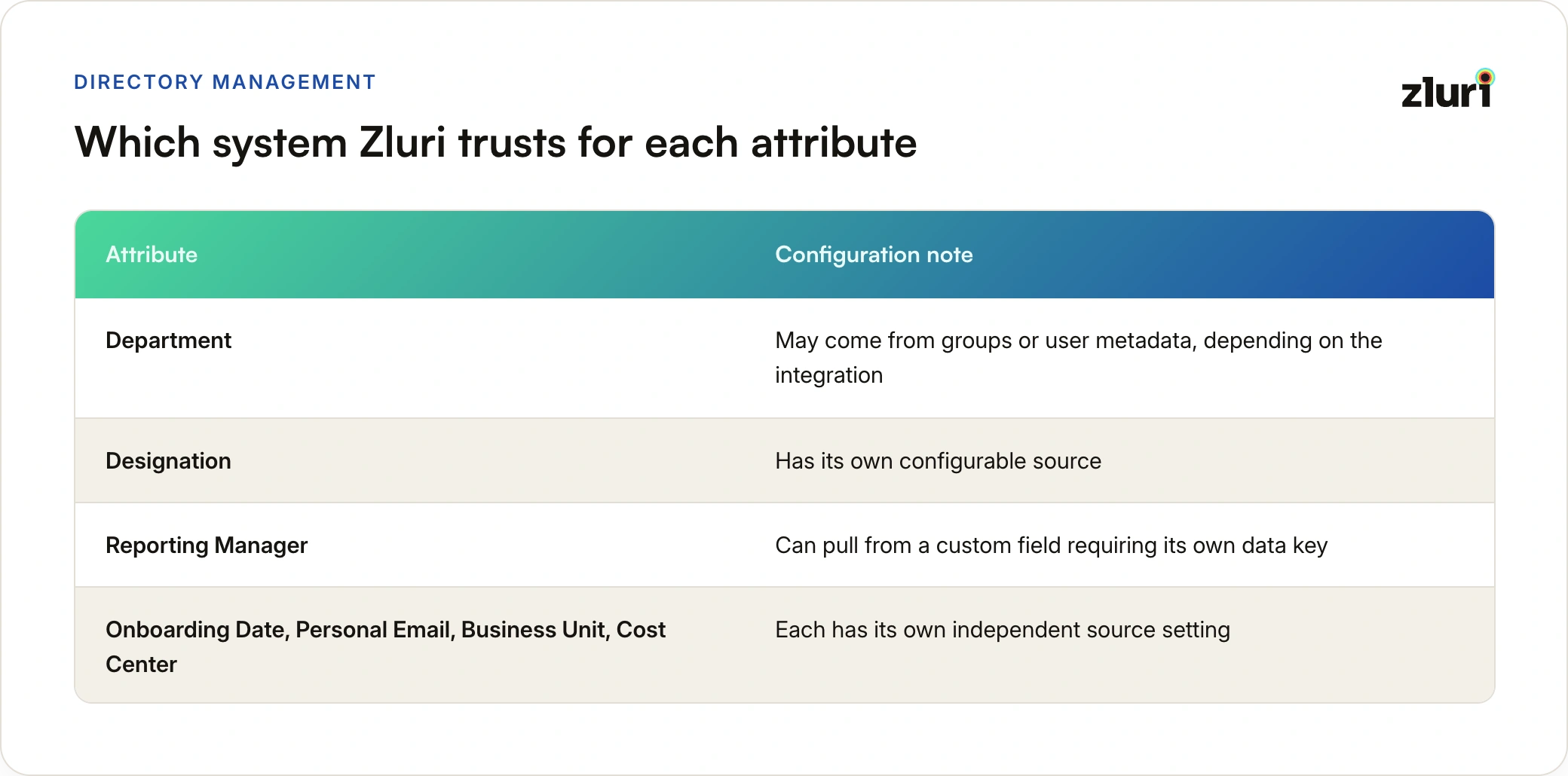
This granularity matters because it lets an organization's actual, messier data reality, HR data split across two systems, a manager field that lives somewhere unusual, be configured accurately rather than forcing everything through a single assumed source that doesn't match reality.
How HR Attributes Actually Drive Provisioning Content, Not Just Timing
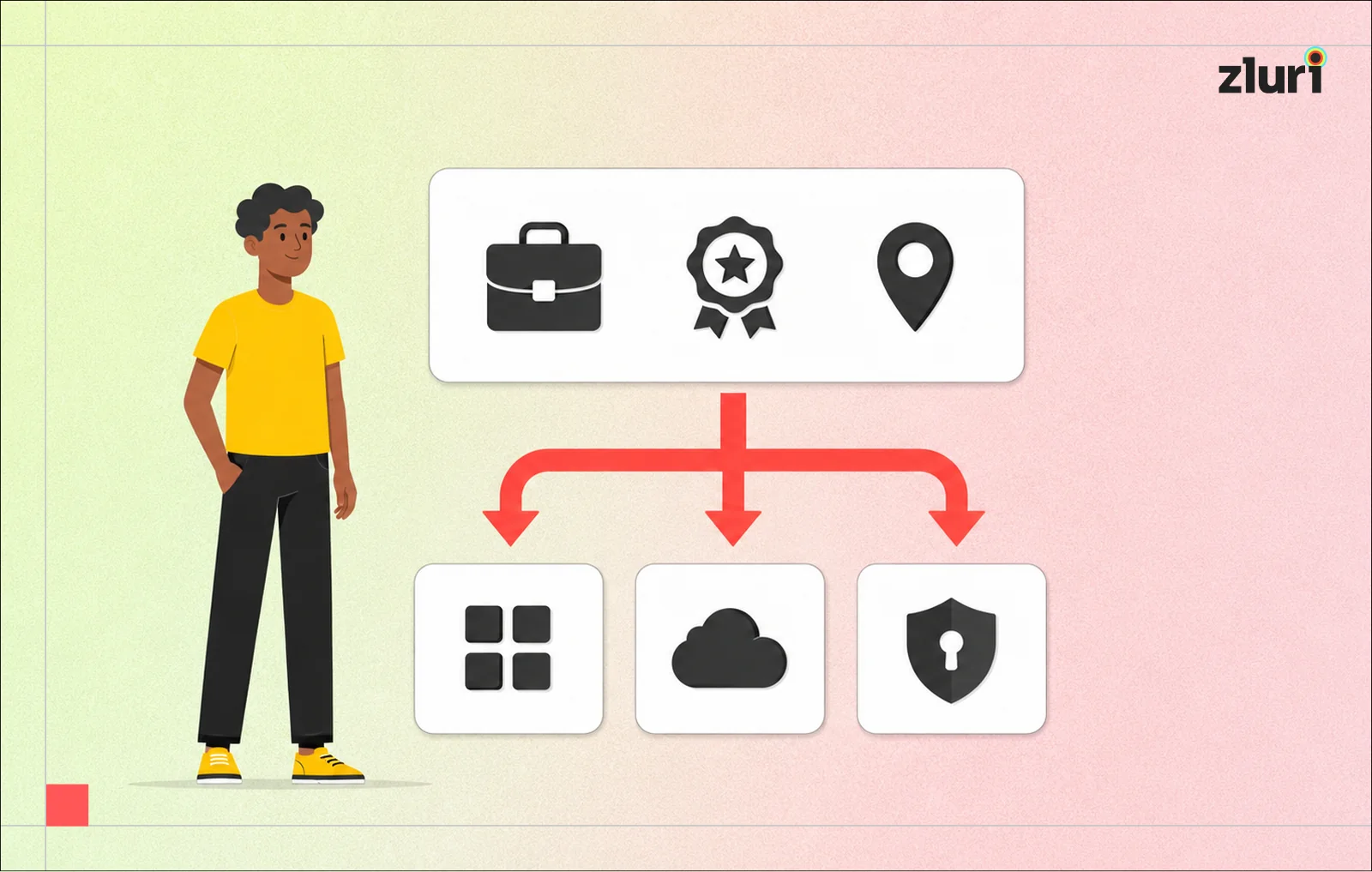
Once Directory Management is correctly configured, HR attributes feed directly into the condition logic that decides what a specific person actually receives. A workflow or playbook's Add Condition or Apply Condition can require Department, Designation, Location, or Employment Type to match specific values before granting a given piece of access.
That means the department field synced from HR isn't just a label. It's the actual input deciding what gets provisioned:

This is the point worth sitting with: two people hired on the same day, through the same automated process, can receive entirely different provisioning outcomes purely because their HR-sourced department attributes differ. That's exactly the intended behavior of HR-driven provisioning done correctly.
Discovering Users Directly From HR Systems
Beyond driving what an existing workflow provisions, HRMS platforms function as one of Zluri's direct user discovery sources in their own right. HiBob, BambooHR, PersonioHR, and similar systems sit alongside the other discovery paths:
- SSOs
- Financial integrations
- Direct application integrations
A person can be discovered by Zluri because they appeared in the HR system, independent of whether they've touched any application yet. This matters for the earliest possible visibility into a new hire, before their actual application access has even started being provisioned.
Classification Driven by HR Data
Whether someone gets classified as an Employee or an External identity, and in more advanced configurations, as a Service or Group account, can be driven directly by HR-sourced data. The trigger is either the selected integration itself or specific email domain rules tied to how the HR system represents that person.
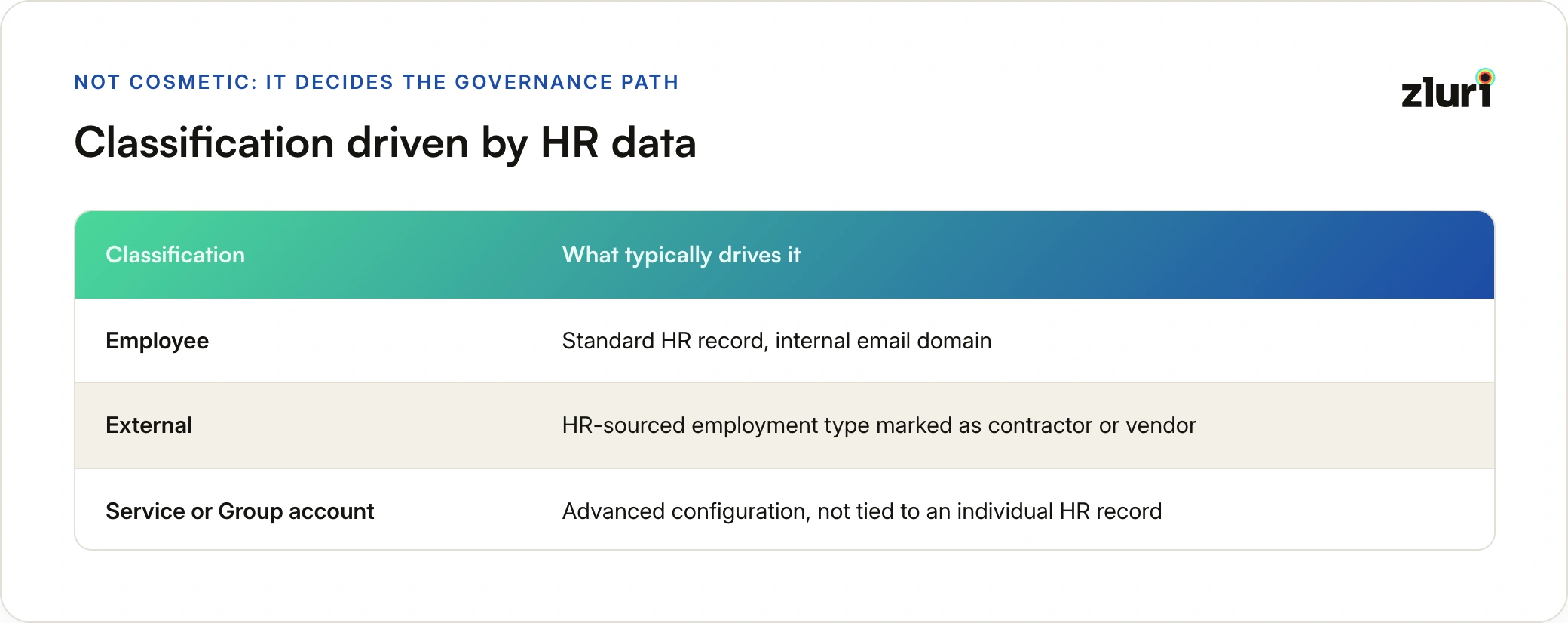
This classification isn't cosmetic. It determines which policies, reviews, and account-type-specific automation rules apply to that identity going forward. An inaccuracy in how HR data represents someone's employment type doesn't just mislabel them; it can route them through the wrong governance path entirely.
The Automated Flow, Start to Finish
The complete, ideal version of this looks like a single, unbroken chain:
- HR adds a new hire's record in the connected HRMS
- Zluri detects that record on the next sync (or instantly for supported systems)
- The configured onboarding playbook fires automatically
- Day-one applications get provisioned according to whatever the person's actual department, designation, and other synced attributes call for
No manual IT step happens anywhere in the sequence. The trigger and the content of what gets provisioned both trace back to the same underlying HR record, which is what makes this genuinely HR-driven rather than merely HR-triggered.
Why Data Accuracy Is the Real Foundation
Every mechanism above depends entirely on the underlying HR data being correct, and it's worth being direct about what happens when it isn't. A wrong department value doesn't just mislabel someone; it routes them into the wrong onboarding playbook entirely, provisioning access appropriate for a role they don't actually hold. A stale reporting manager field doesn't just misname an approver; it can misdirect an access review or an approval routing decision to someone who's no longer actually accountable for that person.
This is why the recommended practice is:
- Testing HR-driven provisioning against a small group before rolling it out organization-wide
- Aligning data fields carefully between Zluri and the HR system, rather than assuming a default mapping is correct
- Double-checking attribute mapping specifically during initial configuration
- Monitoring audit logs afterward to catch drift in HR data changes over time, rather than assuming the initial setup stays accurate indefinitely
This is one piece of a broader lifecycle practice; see how Zluri automates user lifecycle management for the full set of capabilities this connects to.
Frequently Asked Questions
Does HR-driven provisioning only control when access is granted, or also what gets granted?
Both, and the "what" is the more consequential half. HR-sourced attributes like department and designation feed directly into the condition logic deciding which specific applications and access levels a person receives, not just the timing of when a workflow fires.
What happens if two people are hired on the same day but end up with different provisioned access?
That's expected, and correct, behavior if their HR-sourced attributes genuinely differ. Different departments or designations should route to different onboarding playbooks with different provisioned access, which is exactly what makes the process HR-driven rather than a single, generic template applied to everyone regardless of role.
Can Zluri discover a new hire before they've been provisioned any application access at all?
Yes. HRMS platforms function as a direct user discovery source in their own right, so a person can be detected by Zluri as soon as their record appears in the connected HR system, independent of whether any application access has started being provisioned yet.
What's the biggest risk to getting HR-driven provisioning right?
Inaccurate or stale HR data feeding the wrong values into the automation. A wrong department field routes someone into the wrong playbook entirely, and a stale reporting manager field can misdirect approvals or reviews to someone no longer actually accountable. Testing against a small group first and monitoring audit logs afterward for drift are the direct mitigations for this risk.