
Most organizations have invested heavily in protecting employee accounts. The identities quietly running in the background, with no owners, no expiry dates, and broad privileges, are a different story entirely.
The Majority of Identities in Your Environment Don't Belong to People
Most identity security programs are built around a single assumption: identities are employees.
You provision them, review their access, enforce MFA, monitor their behavior, and deactivate their accounts when they leave.
That assumption no longer reflects how modern IT environments actually work.
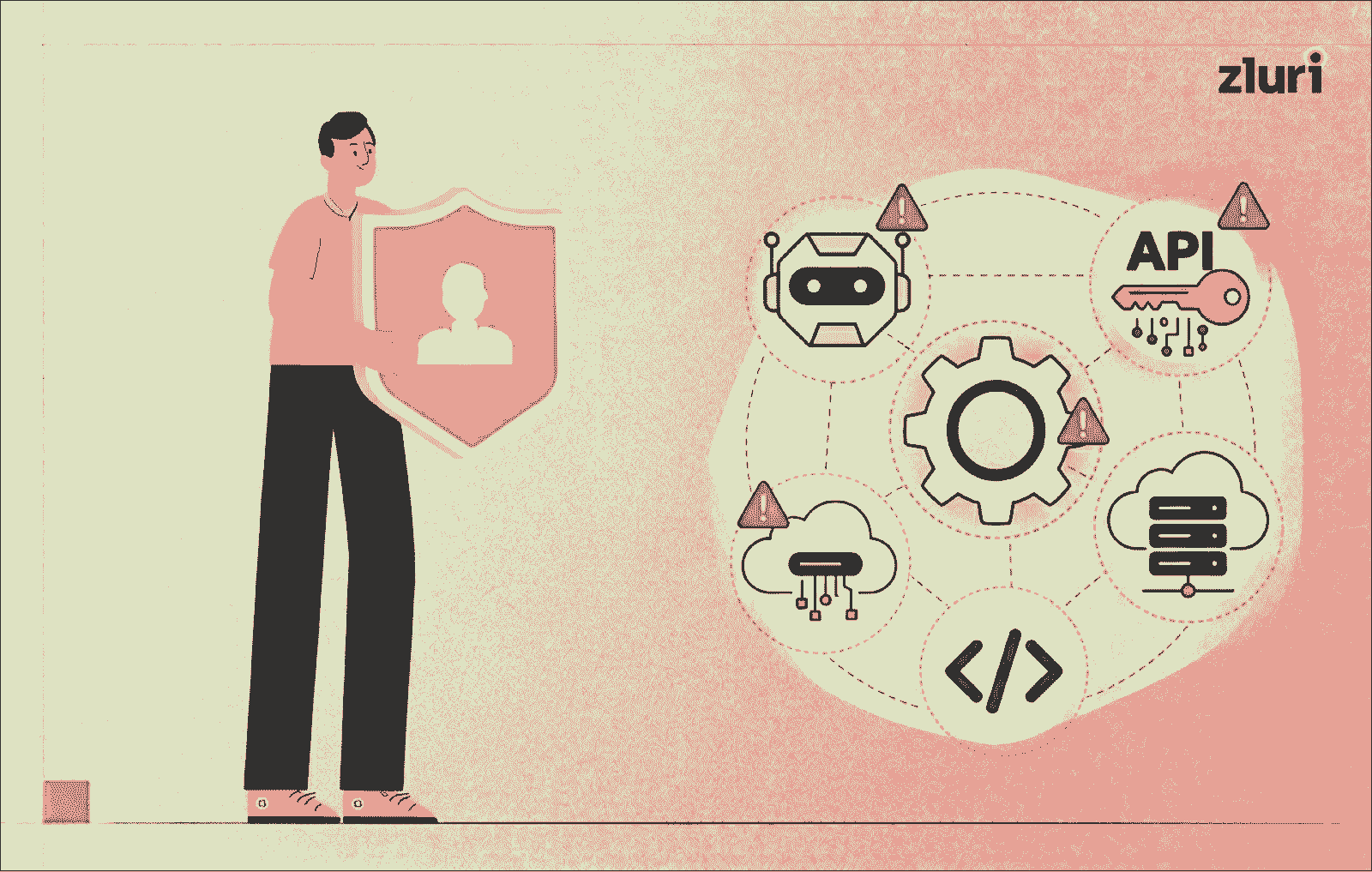
Today, the majority of identities in most enterprise environments aren't human. They're service accounts running critical business processes. API tokens connecting SaaS applications. Automation scripts moving data across systems. Bots handling workflows. AI agents interacting with enterprise tools. Cloud workloads spinning up machine identities dynamically.
And unlike employees, these identities don't follow a clear lifecycle, rarely have defined ownership, often operate with elevated privileges, and almost never go through consistent access reviews.
In many organizations, non-human identities (NHIs) outnumber human users by 10x or more, yet they remain one of the least governed parts of the identity ecosystem.
That's the core problem. While security teams invest heavily in protecting user accounts, attackers have shifted focus to something far easier to exploit: static, over-privileged, and poorly monitored non-human credentials.
These identities don't trigger suspicion when they access systems. They don't complain when permissions stay excessive. They don't enforce least privilege unless someone explicitly builds that in. They simply exist, quietly accumulating risk over time.
This guide breaks down what non-human identities actually include, why traditional identity security models fail to govern them, the specific risks they create, and what your team can do to close the gap before they become your next breach.
What Are Non-Human Identities?
An identity, in modern IT terms, is anything that can authenticate and access systems (not just people).
A non-human identity is any digital identity used by an application, machine, automation script, or integration to interact with systems, data, or services without direct human involvement.
They exist everywhere in your environment, and in far greater numbers than most teams realize.
Service accounts are created to allow applications or background processes to run scheduled jobs, sync data between systems, power backend services, and support legacy integrations. Many are created during projects and never revisited, even after the original use case disappears.
API keys and access tokens are the backbone of SaaS ecosystems. They power SaaS-to-SaaS integrations, automation workflows, CI/CD pipelines, and data ingestion processes. Unlike user credentials, API tokens often don't expire, aren't rotated regularly, and carry broad persistent permissions, which makes them one of the most commonly exploited identity entry points.
OAuth integrations and app connections are created every time a SaaS application connects to another. Each integration creates an identity that can access data continuously, operate with delegated permissions, and persist long after the original need disappears. Over time, this produces integration sprawl with very little centralized visibility.
Bots and automation accounts power RPA workflows, IT automation scripts, chatbots, and scheduled operational tasks. Because automation typically requires high privileges to function, these identities are attractive targets if compromised.
Machine and workload identities are dynamically created for containers, virtual machines, microservices, and serverless workloads in cloud-native environments. They can appear and disappear rapidly, making them nearly impossible to track with traditional IAM approaches.
AI agents and autonomous systems are an emerging category. AI copilots accessing internal data, automated decision-making systems, and agentic workflows executing tasks across applications often require broad access to multiple systems, increasing both complexity and risk.
Why Their Numbers Keep Growing
This isn't accidental. It's a direct result of how modern IT operates.
Automation is expanding across IT, security, finance, and operations. Every new SaaS integration introduces new API tokens and service identities. Cloud-native development creates identities at machine speed. AI tools require persistent system access. The result is an identity environment where non-human identities multiply faster than governance programs can track them.
Why Traditional Identity Security Models Fail Here
Most identity governance programs were designed around a predictable lifecycle: people join, change roles, and eventually leave.
That structure works because there's a clear framework behind it. HR systems trigger onboarding and offboarding. Managers approve access requests. Periodic reviews validate permissions. Policies enforce least privilege.
Non-human identities don't fit this model at all.
They don't have a hire date, a reporting manager, or a formal lifecycle. They're created directly by developers, automation teams, or SaaS administrators, completely outside traditional identity governance workflows.
No one truly owns them. A service account might have been created by a developer who's since left, a project team that no longer exists, or a vendor integration no longer in active use. Over time, the context around why the identity was created disappears. Without clear ownership, no one reviews its permissions, rotates its credentials, or notices when it becomes unnecessary. The result is a growing pool of orphaned, high-risk identities.
They don't follow standard lifecycle processes. Human identities move through structured workflows (joiner, role change, access review, exit, deprovision). Non-human identities typically follow a much simpler path: created, used indefinitely, forgotten. They rarely have expiration dates, automatic deactivation triggers, or scheduled reviews. They remain active long after their original purpose has ended.
Traditional IAM tools are built for people, not systems. Most IAM and IGA platforms are optimized for user provisioning workflows, role-based access control, and HR-driven lifecycle events. API tokens aren't tied to organizational hierarchies. Service accounts don't fit role-based models. Machine identities are created dynamically. Many organizations can't even maintain a complete inventory of their non-human identities, let alone govern them.
Credentials are often static and hard-coded. Unlike users who rely on MFA or modern authentication methods, NHIs often authenticate using hard-coded passwords in scripts, long-lived API tokens, and embedded credentials in configuration files. These credentials can remain unchanged for years. And because they're embedded deep in systems, rotating them carries operational risk, so teams avoid doing it.
Access reviews rarely include them. Most periodic reviews focus on users. Service accounts, tokens, and integrations are excluded because there's no clear reviewer assigned, their permissions are difficult to interpret, and they don't fit standard review workflows. Permissions accumulate over time and almost never shrink.
The Specific Risks Non-Human Identities Create
Non-human identities don't just introduce governance challenges in theory. They create concrete, high-impact security risks that attackers are actively exploiting.
What makes these risks particularly dangerous is that NHIs often combine three things that rarely appear together in human accounts: persistent access, elevated privileges, and minimal oversight.
Excessive privileges that never get reviewed. Most NHIs are created with broad permissions to avoid operational friction. A service account gets full database access instead of limited read/write. An API token receives org-wide scope instead of app-specific permissions. An automation account gets administrative rights across multiple systems. Unlike user access, these permissions are rarely revisited, which means inactive or low-use identities can hold some of the highest privilege levels in your environment. This is precisely the kind of access provisioning gap that leads to privilege abuse.
Orphaned service accounts after projects end. Service accounts are frequently created for temporary initiatives (system migrations, vendor integrations, automation pilots). Once the project ends, the account often remains active because no one is assigned ownership, teams fear breaking unknown dependencies, and there's no centralized visibility. These orphaned identities can remain active for years, giving attackers long-term, stealthy access without detection.
Hard-coded credentials in scripts and applications. Developers and automation teams regularly store passwords in configuration files, API tokens within scripts, and secrets in code repositories. These credentials are typically long-lived, shared across systems, and difficult to rotate. If an attacker gains access to a compromised system or a leaked repository, they can immediately use these credentials to access multiple environments, creating a chain-reaction risk across interconnected systems.
API token sprawl across SaaS environments. Every integration creates new tokens and persistent access pathways. Over time, organizations accumulate thousands of API tokens, many with broad scopes, no expiration policies, and no audit trail. A single compromised token can give attackers direct system-to-system access, often bypassing traditional security controls entirely. This is a direct consequence of ungoverned SaaS sprawl.
No ownership, no accountability. When an incident occurs, security teams often can't answer basic questions: Who created this identity? What is it used for? Should it still exist? That lack of accountability significantly delays incident response and remediation.
Invisible pathways for lateral movement. Non-human identities operate continuously, don't trigger behavioral anomalies easily, and aren't monitored like users. An attacker who compromises one NHI can often use its permissions to access additional systems, retrieve sensitive data, escalate privileges, and maintain persistent access, all while appearing as legitimate system activity.
Why Attackers Are Increasingly Targeting Non-Human Identities
Human accounts are now heavily protected. Most organizations enforce MFA, conditional access policies, behavioral monitoring, and session tracking. These controls significantly raise the barrier for attackers.
Non-human identities, by contrast, typically rely on static credentials, long-lived API tokens, and embedded authentication secrets. From an attacker's perspective, targeting NHIs offers a higher success rate with lower risk of exposure.
Beyond ease of access, NHIs provide something even more valuable: persistence. Human accounts log in at predictable times, show recognizable activity patterns, and can be quickly disabled when suspicious behavior is detected. Non-human identities run continuously, authenticate automatically, and perform routine system-to-system tasks. A compromised NHI provides access that doesn't rely on user sessions, doesn't raise behavioral alarms easily, and can remain active for extended periods.
And because many NHIs are granted elevated permissions to function effectively, compromised identities often provide immediate high-value access, eliminating the need for gradual privilege escalation.
Most identity security controls focus on interactive user behavior: login anomaly detection, risk-based authentication, session monitoring. Non-human identities don't behave like users. They don't log in interactively, don't respond to MFA prompts, and don't generate typical behavioral signals. This allows attackers to operate through compromised NHIs without triggering most traditional security alerts.
The detection gap compounds everything. Security teams often struggle to identify unauthorized use of API tokens, abnormal service account behavior, or misuse of automation credentials. Without strong visibility and monitoring, attackers can remain active for months before discovery.
The Visibility Problem
Before you can secure non-human identities, you need to answer a basic question: How many of them actually exist in your environment today?
For most organizations, that answer is unclear.
Unlike user identities (which flow through centralized systems like HR platforms or identity providers), non-human identities are created everywhere across the IT ecosystem, by developers, SaaS admins, automation tools, cloud services, and external vendors.
Most security teams don't struggle because they lack controls. They struggle because they lack complete visibility. This is exactly the gap that Identity and Visibility Intelligence Platform (IVIP) is designed to close, giving security teams a continuous view of every human and non-human identity across the environment.
NHIs are created outside centralized governance. Human identities enter systems through HR onboarding processes, identity provider provisioning, and access request approvals. Non-human identities are created directly within SaaS applications, cloud platforms, DevOps pipelines, and automation tools, often without ever passing through traditional IAM or IGA systems.
SaaS sprawl makes discovery extremely difficult. Modern organizations rely on hundreds of SaaS applications, each capable of generating its own non-human identities (integration tokens, connected apps, automation accounts, API credentials). These identities are distributed across multiple platforms, making it nearly impossible to answer basic questions: Which integrations have access to sensitive data? Which tokens have organization-wide permissions? Which service accounts are inactive but still enabled? The same challenge applies to shadow IT, where business teams adopt tools outside IT's view entirely.
Shadow integrations multiply unknown identities. Business teams frequently connect tools without involving IT or security. Marketing connects CRM and analytics platforms. Finance automates data transfers between SaaS tools. Operations deploys automation scripts independently. Each connection creates new NHIs that are never documented or reviewed.
Dynamic cloud environments create identities at machine speed. Containers, microservices, and serverless functions often generate identities dynamically to interact with other services. Traditional identity tracking methods, which rely on static inventories, can't keep up.
Ownership context is lost over time. Even when organizations initially document NHIs, that context rarely stays current. As developers move roles, projects retire, vendors change, and systems are replaced, the knowledge of why an identity exists gradually disappears.
You can't govern what you can't see. And until organizations achieve comprehensive visibility into their non-human identity landscape, these identities will continue representing one of the largest hidden risks in modern IT environments.
How to Reduce Non-Human Identity Risk
Reducing NHI risk requires a shift from user-centric identity security to identity-centric governance, where every identity, human or not, is treated as a controlled security entity. A modern identity strategy starts here.
Build a centralized inventory. The first step is establishing a comprehensive inventory that covers service accounts, API keys and tokens, connected applications, automation accounts, and machine identities, spanning SaaS applications, cloud platforms, on-prem systems, and DevOps environments. Tools like Zluri's IVIP continuously discover every identity type across the entire stack, including those created outside formal IT workflows.
Assign clear ownership and accountability. Every non-human identity should have a defined owner (not an individual user account, but a team responsible for the identity, the business function it supports, and the system it belongs to). Ownership ensures someone is accountable for reviewing access levels, managing credential rotation, and validating continued necessity. This single step significantly reduces the number of orphaned identities.
Apply least privilege to non-human identities. Restrict permissions to only required actions, limit access scope to specific resources, and remove administrative privileges where unnecessary. Applying least privilege to NHIs requires deeper analysis than for users, since their permissions are tied to operational workflows rather than roles. But it's one of the most impactful ways to reduce potential attack impact.
Implement lifecycle controls and expiration policies. Introduce automatic expiration dates for tokens and credentials, periodic validation requirements, and scheduled deactivation for unused identities. This ensures identities created for temporary needs don't remain active indefinitely. The access provisioning lifecycle framework applies here just as much to machine identities as to human ones.
Automate credential rotation and secret management. Static credentials represent one of the highest NHI risks. Implement automated processes to rotate API keys regularly, update service account passwords, and manage secrets securely in vault systems. Manual rotation is too complex and error-prone to perform consistently at scale.
Include non-human identities in access reviews. Periodic access reviews must cover service account permissions, integration scopes, automation privileges, and API access levels, not just users. This requires adapting review workflows to handle identities without traditional managers or role hierarchies.
Monitor behavior and detect anomalies with ISPM. Securing NHIs isn't just about governance. It requires continuous monitoring focused on unusual access patterns, unexpected system interactions, unauthorized privilege use, and abnormal data transfer activity. Identity Security Posture Management replaces periodic snapshots with real-time detection, surfacing over-privileged accounts, orphaned access, and identity drift before they become incidents.
How Zluri Approaches NHI Governance
Most identity governance platforms were built for human users. Non-human identities were either an afterthought or handled through a separate tool entirely. Zluri's approach treats them as first-class governance entities, applying the same rigor to a service account or API token that a mature IGA program applies to an employee account.
The foundation is visibility. Zluri ingests NHIs from across the entire identity environment: AWS IAM roles, access keys, and Lambda identities; Azure service principals and managed identities; GCP service accounts; GitHub PATs and service accounts; GitLab tokens; Snowflake key-pair users; secrets in vaults and key management systems; and SaaS-layer tokens, OAuth apps, and integration identities that most cloud-focused tools completely miss. This last category (SaaS NHIs) is where the majority of ungoverned machine identities actually live in most organizations, and it's where traditional IGA and PAM tools have the largest blind spot.
Each discovered NHI gets a 360-degree identity profile: owner, associated accounts across cloud and SaaS systems, roles and permissions, where it's used, last activity patterns, credential metadata (rotation age, expiry status), and an "accessed-by" map showing which humans or systems are actually invoking it. This converts opaque machine accounts into auditable, governable objects.
From there, Zluri's ISPM layer continuously monitors NHI risk, flagging dormant identities, orphaned accounts, over-permissioned roles, and credentials that have gone without rotation. When a risk is detected, Zluri can route it through an approval workflow or trigger automated remediation directly through its integrations, rather than generating a report and waiting for someone to act.
Access reviews extend to NHIs through the same engine used for human certifications. Owners receive attestation requests. Dormant identities are surfaced for cleanup. Privileges are justified or revoked. The same audit trail that satisfies a SOC 2 reviewer for user access applies equally to service account reviews.
For situations where a developer or system needs temporary elevated access to a machine credential, Zluri supports time-bound, just-in-time access rather than persistent raw secrets, keeping the principle of least privilege intact even in operational contexts that traditionally bypass it.
The broader significance is that Zluri becomes the only platform where a security team has a single governance control plane covering employees, contractors, service accounts, API tokens, bots, cloud workload identities, and AI agents, without needing to stitch together a separate PAM tool, a cloud security scanner, and a SaaS management platform to get there.
The Bigger Shift
Non-human identity risks aren't isolated issues. They represent a systemic governance gap.
For years, identity security strategies were built around protecting people. But a significant portion of system access today isn't initiated by users. It's driven by service accounts, API tokens, automation workflows, integrations, and machine identities operating continuously in the background.
These identities now form one of the largest and least governed segments of the identity landscape. They often carry elevated privileges, rarely follow structured lifecycle processes, lack clear ownership, use long-lived credentials, and operate with minimal oversight.
This combination creates an attack surface that is both powerful and difficult to monitor.
Next-generation IGA is evolving to address exactly this reality. Where legacy platforms were built for human users and annual certification campaigns, modern identity governance treats every identity as a first-class entity, governed with the same rigor regardless of whether it belongs to a person or a process.
The direction is clear: non-human identity governance is moving from a niche security concern to a foundational requirement in enterprise identity programs. Auditors are asking for full identity inventories. Regulators are mandating privilege attestation. Buyers evaluating IGA platforms now treat NHI coverage as a baseline expectation, not a differentiator.
Identity governance can no longer remain human-centric. It must evolve into a comprehensive approach that treats every identity, human or non-human, as a critical security entity requiring visibility, control, and continuous monitoring. Centralized identity and access management is what makes that scale possible.
Because in today's environment, securing identities isn't just about managing users. It's about governing everything that can access your systems, especially the identities that operate quietly in the background.
Frequently Asked Questions
What is a non-human identity?
A non-human identity is any digital identity used by an application, machine, automation script, or integration to access systems and data without direct human involvement. Common examples include service accounts, API keys, OAuth tokens, bots, machine identities, and AI agents.
Why are non-human identities considered a security risk?
NHIs are risky because they typically combine three things that rarely appear together in human accounts: persistent always-on access, elevated privileges, and minimal governance oversight. They often have no defined owner, no expiration date, and no consistent review process, making them attractive targets for attackers looking for a quiet, long-term foothold.
How do non-human identities differ from human identities in terms of lifecycle management?
Human identities follow HR-driven workflows with onboarding, role changes, access reviews, and offboarding. Non-human identities have no equivalent trigger mechanism. They're created by developers or system admins, often for a specific purpose, and then tend to remain active indefinitely without any structured deactivation process.
What is API token sprawl?
API token sprawl refers to the uncontrolled accumulation of API tokens across an organization's SaaS environment. As integrations multiply, tokens pile up, many with broad permissions, no expiration policies, and no clear owner. A single compromised token in this environment can give an attacker direct system-to-system access.
How can organizations gain visibility into non-human identities?
Visibility starts with discovery, building a centralized inventory that spans SaaS applications, cloud platforms, on-prem systems, and DevOps pipelines. From there, organizations need continuous monitoring to detect new identities as they're created, track permissions over time, and flag anomalous behavior before it becomes a breach. Platforms like Zluri's IVIP are built specifically for this.
What does least privilege mean for non-human identities?
Least privilege for NHIs means restricting each identity to only the permissions it actually needs to perform its specific function. In practice, this means scoping API tokens to specific resources rather than entire organizations, giving service accounts read/write access rather than admin rights, and regularly auditing whether existing permissions still match current operational needs.
How often should non-human identities be reviewed?
There's no universal answer, but high-risk NHIs (those with elevated privileges or access to sensitive data) should be reviewed at least quarterly. Lower-risk identities can follow standard annual review cycles. The more important practice is implementing expiration policies and automated alerts for inactive or anomalous identities so governance doesn't depend entirely on scheduled reviews.
What's the difference between a service account and a machine identity?
A service account is typically a user-like account created within an application or directory to run background processes, scheduled jobs, or integrations. A machine identity is associated with infrastructure itself (containers, virtual machines, microservices, serverless functions) and is often created and destroyed dynamically as workloads scale. Both carry governance challenges, but machine identities are harder to track because of their ephemeral nature.
What is Identity Security Posture Management (ISPM) and how does it help with NHIs?
ISPM is a continuous security monitoring approach that detects and remediates identity risks in real time, rather than waiting for quarterly access reviews. For non-human identities specifically, ISPM surfaces over-privileged accounts, orphaned credentials, policy violations, and unusual activity patterns as they occur, giving security teams the context to act before an attacker does.
.webp)


.svg)